Somerset House x Pryntd

AdaptivePresence™
How one of Britain’s most important cultural institutions can meet twenty-first century complexity without compromising its heritage.
Historic buildings are fixed. Human needs are not. Pryntd bridges that gap through persistent shared reality infrastructure.
Somerset House, accessible as an adaptive experience.
A spatial layer for visitors, staff, artists, tenants, contractors, accessibility teams, security teams and remote audiences.
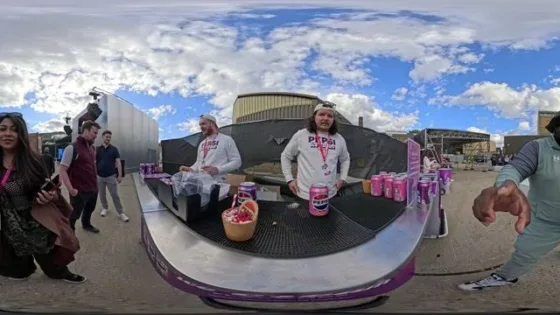
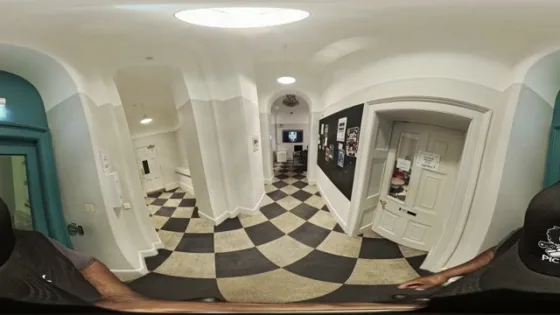
Double-tap the red icon to activate motion sensing. Make sure you tap Allow when the prompt appears saying “pryntd.xyz would like to Access Motion and Orientation”. It brings the experience to life and allows you to look around hands-free.
Somerset House is a living cultural ecosystem.
Somerset House is one of London’s most significant cultural destinations: a Grade I listed historic estate where artists, visitors, tenants, event organisers, contractors, security teams, educators, accessibility specialists, creative businesses and public audiences operate at the same time.
Its programmes span exhibitions, performances, festivals, learning, commercial activity, The Courtauld Gallery, the Ice Rink and a dense working community across the site.
3,074,736
ALVA visits recorded for Somerset House in 2024.
2,895,010
ALVA visits recorded for Somerset House in 2025.
Grade I
A protected historic estate of exceptional interest.
Somerset House as cultural infrastructure
Heritage was never designed for modern complexity.
The challenge facing Somerset House is not preserving stone. It is coordinating people, knowledge, access, safety, operations and participation across a protected estate.
Many functions, one estate.
- Accessibility and inclusion
- Security and emergency readiness
- Visitor experience and wayfinding
- Commercial activity and event operations
People carry the system.
- Staff onboarding
- Contractor familiarisation
- Heritage protection
- Compliance and procedures
Audiences are no longer one group.
- Disabled audiences
- Remote audiences
- Hybrid event participants
- Visitors with different languages, needs and contexts
The Listed Building Challenge
Historic institutions cannot simply rebuild their way out of operational problems.
England contains more than 370,000 listed building entries, and only around 2.5% are Grade I. These buildings face restrictions on physical alterations, complex planning approvals, conservation duties, maintenance costs, specialist skills shortages, accessibility constraints and emergency preparedness considerations.
Somerset House needs tools that improve coordination, access and participation while respecting the fabric of the estate.
Fragmentation makes every challenge harder.
The issue is not accessibility alone. It is not training alone. It is not preparedness alone. The deeper issue is fragmentation.
Technology
Knowledge
Participation
Operations
Experience
Stakeholders
Suppliers
Departments
Workflows
Institutional Memory
The more complex the institution becomes, the more fragmentation increases.
Adaptive Presence™ is a new operating layer for cultural institutions.
Pryntd allows institutions to continuously adapt experiences, accessibility, preparedness, training and participation around people without requiring constant physical changes to the environment.
Adaptive Presence™
Persistent Shared Reality
Heritage-Sensitive Infrastructure
Visitors
Wayfinding, interpretation, access support, orientation and context adapt around the participant.
Teams
Staff, security, contractors and event teams learn the estate spatially before they need to act inside it.
Programmes
Exhibitions, performances, festivals and public programmes gain a persistent digital layer.
Audiences
Remote and disabled audiences can participate beyond the physical limits of capacity, geography and mobility.
The institution adapts around every participant.
Participation becomes proactive.
Instead of expecting visitors to adapt to the building, information, navigation, context, communication and support adapt to the visitor.
Knowledge becomes spatial.
Staff and contractors can experience environments before entering them. New team members learn faster, and institutional memory persists when people leave.
Readiness becomes experiential.
Teams can explore spaces, understand layouts, practise scenarios and develop confidence before incidents occur.
Physical attendance is expanded, not replaced.
Millions more may never visit because of geography, disability, time, cost or capacity. Adaptive Presence lets Somerset House extend participation beyond physical attendance while protecting the value of being there.
Culture becomes persistent.
Pryntd transforms spaces, events, exhibitions and experiences into accessible shared realities that preserve participation, knowledge and cultural connection.
The next challenge is preserving participation.
Historic institutions have spent centuries preserving buildings. The next challenge is preserving knowledge, accessibility, cultural connection and participation.
This is Adaptive Presence™.
This is Shared Reality.
This is Pryntd.
Spatial knowledge for staff, tenants and creative communities
Somerset House preserves culture. Adaptive Presence™ preserves participation.
Pryntd makes both possible through persistent shared reality infrastructure for human environments.
ALVA 2025 Visitor Figures
ALVA 2024 Visitor Figures
Historic England Listed Buildings
Somerset House
Pryntd Contact
Pryntd Login