AI, robotics and shared reality
The next interface is not another screen. It is a system that understands human intent, movement, space, environment and accessibility in real time.
Unlock shared reality
See the model
141
papers reviewed in 2025 adaptive HCI research.
460
papers surveyed on AR enhanced robotics interaction.
26
AI driven HCI studies mapped across machine learning, robotics and virtual environments.
25,336
BCI publications analysed in a bibliometric review.
The limitation of today's human computer interaction
Human computer interaction is still interface bound, not experience aware. It recognises explicit inputs. It does not yet understand the full human context around those inputs.
Computers understand inputs. They do not understand human experience in context.

Input first
Explicit inputs
Traditional HCI starts with keyboard, touch, menu selection, movement tracking and speech. These channels are useful, but narrow.
Cognitive strain
Adaptive HCI research identifies cognitive load, environmental variability and real time adaptation as core pressure points for modern systems.
Fragmented progress
Recent scoping work shows AI driven HCI is developing across separate disciplines, from machine learning to robotics and virtual environments.
The data problem no one talks about
Every AI system is limited by the quality and dimensionality of the human data it receives. Today's models are rich in text, images and structured datasets. Human experience is richer than that.
→
AI learns from flat signals
Text and image datasets describe the world, but they do not fully capture movement, physical constraint, perception or accessibility.
→
Human intelligence enters through interaction
Interaction is a primary channel for turning human intelligence into machine usable signal, yet this channel remains under optimised.
→
The world is not flat
AI is learning from flat data about a three dimensional, temporal and sensory world.

Context depth
The shift to human AI symbiosis
Human AI interaction is moving from tool usage to collaboration. Systems can now anticipate needs, adapt behaviour and act as agents. The missing layer is true environmental and human context awareness.
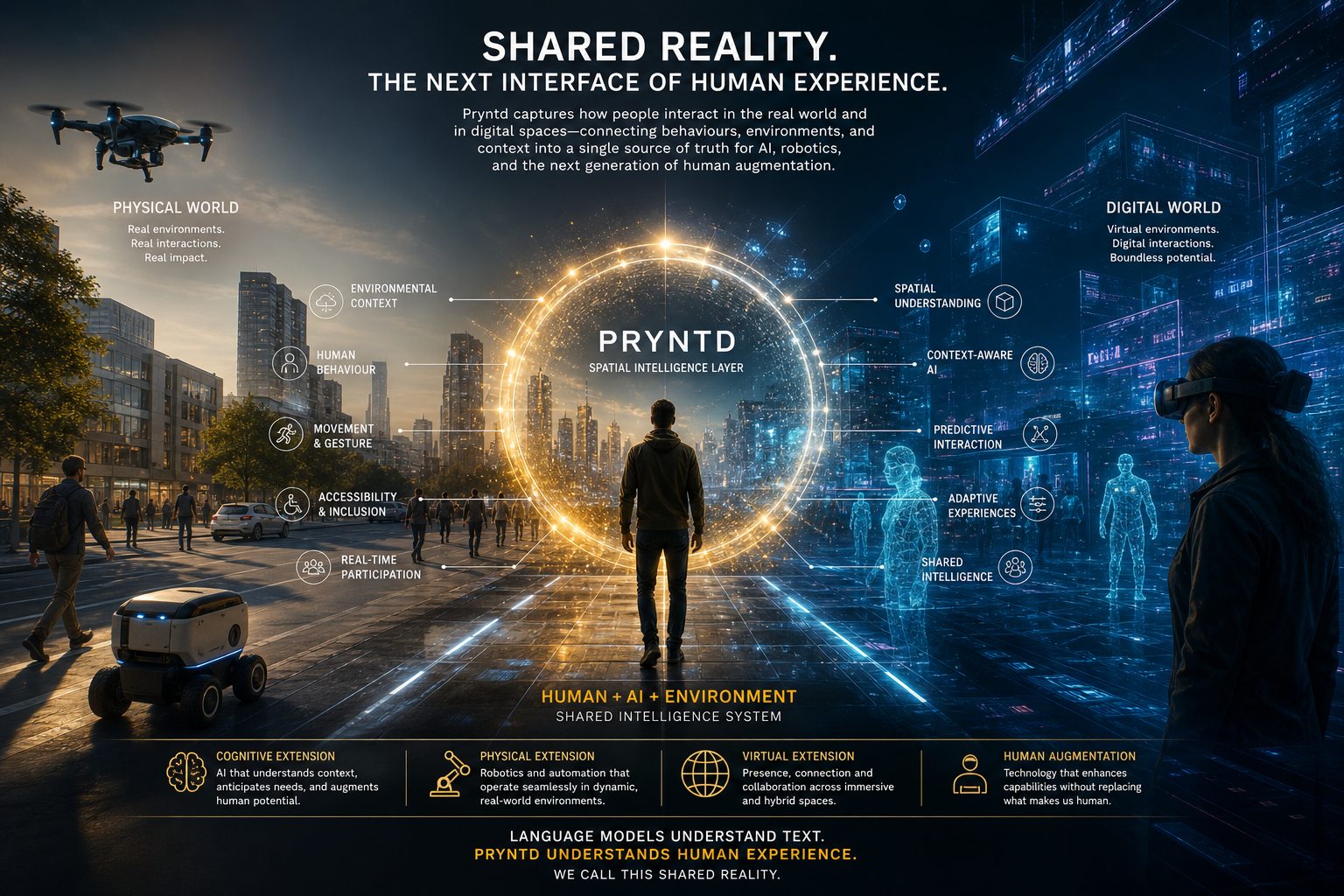
Human plus AI plus environment
Shared intelligence starts when all three are understood together.
From command to collaboration
AI no longer waits only for an instruction. It increasingly recommends, prioritises, remembers and acts.
Context remains thin
Most systems still cannot reliably infer what a person is experiencing inside a real physical or hybrid environment.
Next paradigm
Human plus AI plus environment becomes a shared intelligence system.

Spatial interaction
Section 4
AI, robotics and XR are converging
Robotics, AI and immersive interfaces are becoming the operating layers for physical digital interaction. These systems work better when they understand space and human behaviour together.
Robotics
Machines need spatial awareness to move through human environments without forcing people to adapt around them.
XR
Visual augmentation can improve interaction by making invisible system state and spatial intent easier to perceive.
AI
Machine learning, robotics and virtual environments are already part of the AI driven HCI research landscape.
Brain computer interfaces are one layer
BCI systems convert neural activity into machine readable input. They can support direct communication with machines, restore motor and sensory function, and extend cognition.
BCIs are not the future alone. They are one layer of a larger system of human augmentation.

Human extension
The real future is multidimensional human understanding
Future systems must respond to spatial context, environmental conditions, movement, behaviour, accessibility needs and real time interaction.
Physical
Where bodies, objects and constraints exist
Rooms, routes, crowd density, lighting, acoustics and access needs form the base layer of lived experience.
Digital
Where signals become computable
Inputs, identity, maps, devices and interaction traces become machine readable structure.
Cognitive
Where meaning and intent emerge
Attention, preference, cognitive load and emotional state influence what the system should prioritise.
Autonomous
Where environments adapt in real time
AI agents, robotics and interfaces adjust to the human situation rather than waiting for manual control.
Why Pryntd's approach wins
While the world builds smarter AI, Pryntd is building better human data. It models human experience across physical and digital environments.
Spatial intelligence
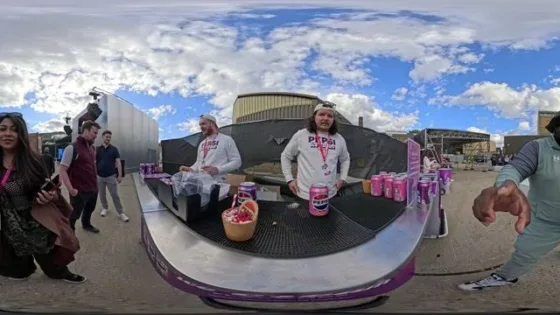
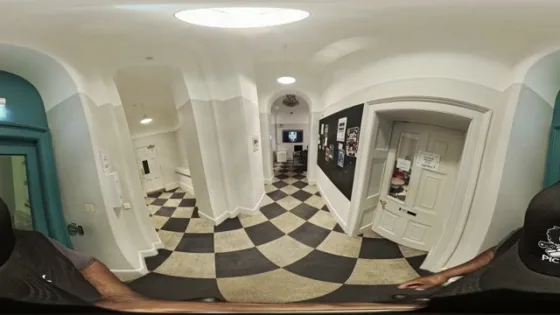
Pryntd captures how people move, gather, queue, discover, access and participate inside real environments.
Behavioural interaction
The system models activity patterns, participation loops and friction points that ordinary interface data misses.
Accessibility first
Human context includes physical constraints, sensory requirements, cognitive load and inclusive participation needs.
Real time participation
Live context gives AI the signal it needs to support better decisions, not just better predictions.

Higher fidelity data
Why this produces superior HCI
Traditional HCI is input based, reactive and fragmented. Pryntd HCI is context aware, predictive, spatially intelligent and accessibility first.
Traditional HCI
Context depth32
Prediction quality38
Spatial awareness24
Accessibility adaptation29
Pryntd HCI
Context depth88
Prediction quality82
Spatial awareness92
Accessibility adaptation86
Reduced cognitive load
Adaptive systems can reduce the burden on users by responding to behaviour and environment in real time.
Higher engagement
More relevant interactions create less friction and better participation across physical and digital settings.
Better decisions
Richer human context produces stronger signal for AI agents, automation and operational intelligence.

Perception extended
Section 9
Augmenting humanity
Pryntd frames augmentation as evolution, not replacement. It extends how people understand, move through and participate in reality.
1
Cognitive extension
AI copilots understand real world context and support decisions with less manual interpretation.
2
Physical extension
Robotics and spatial intelligence coordinate around people, space and operational constraints.
3
Virtual extension
Presence spans hybrid and immersive environments without abandoning the real world.
The inevitable future
The future is not AI replacing humans, robots replacing workers or virtual worlds replacing reality. The future is systems that understand human experience, environments that adapt in real time and intelligence that exists across physical and digital space.
Systems understand experience
Intent, behaviour, space and accessibility become part of the intelligence layer.
Environments adapt in real time
Places respond to people rather than forcing people to decode static systems.
Reality becomes shared
Physical, digital and autonomous systems converge into one human centred operating model.
Evidence used
The page uses public research signals from HCI, adaptive interfaces, AI driven interaction, AR robotics and BCI literature.
Human Computer Interface overview
Adaptive human computer interaction for Industry 5.0
Artificial intelligence and human computer interaction
The value of interaction in data intelligence
From tools to partners in human AI teams
Augmented reality and robotics survey
Brain computer interface trend, challenges and threats
Human computer interaction and user experience in the AI era
The new interface layer
Everyone is building smarter machines. Pryntd is building the human experience layer those machines need.
Language models understand text. Pryntd understands human experience. We call this shared reality.
Unlock shared reality
Shared Reality: The New Interface Layer