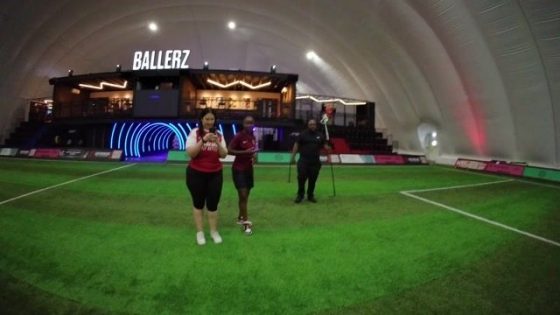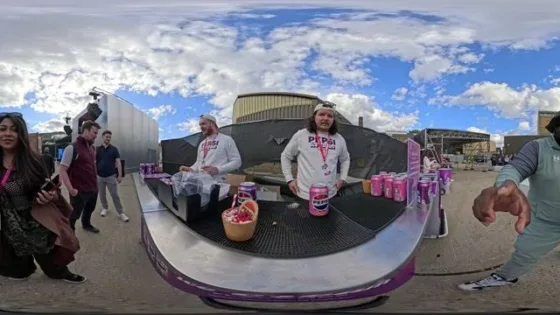
The infrastructure for human environments.
Participation, coordination, accessibility, intelligence, and value converging across physical and digital experience.
Hybrid environments coordinated in realtime
Browser-native access across everyday devices
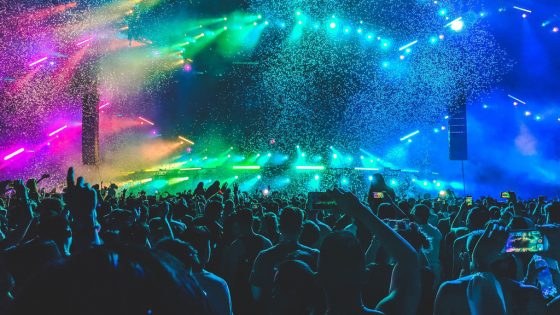
Audiovisual culture evolving into shared reality
The world is becoming spatial, multimodal, hybrid, and realtime.
Artificial intelligence is becoming multimodal. Communication is becoming audiovisual. Participation is becoming hybrid. Human interaction is becoming increasingly immersive and interconnected.
The vision existed. The infrastructure did not.
Immersion does not scale until participation becomes easy.
Pryntd focuses on the bottlenecks underneath immersive technology: creation, access, monetisation, interoperability, distribution, and operational coordination.
Shared
Reality
Engine
Creation
Distribution
Participation
Monetisation
Accessibility
Coordination
The problem was never immersion itself. The problem was friction.
Creation
Immersive participation cannot scale while creation remains difficult, expensive, and developer dependent.
Participation
Immersion must work through existing behaviour, existing devices, and natural audiovisual interaction.
Coordination
Physical and digital environments need systems that synchronise stakeholders, spaces, content, data, and value.
Shared reality becomes powerful when anyone can access it, create for it, and participate in it.
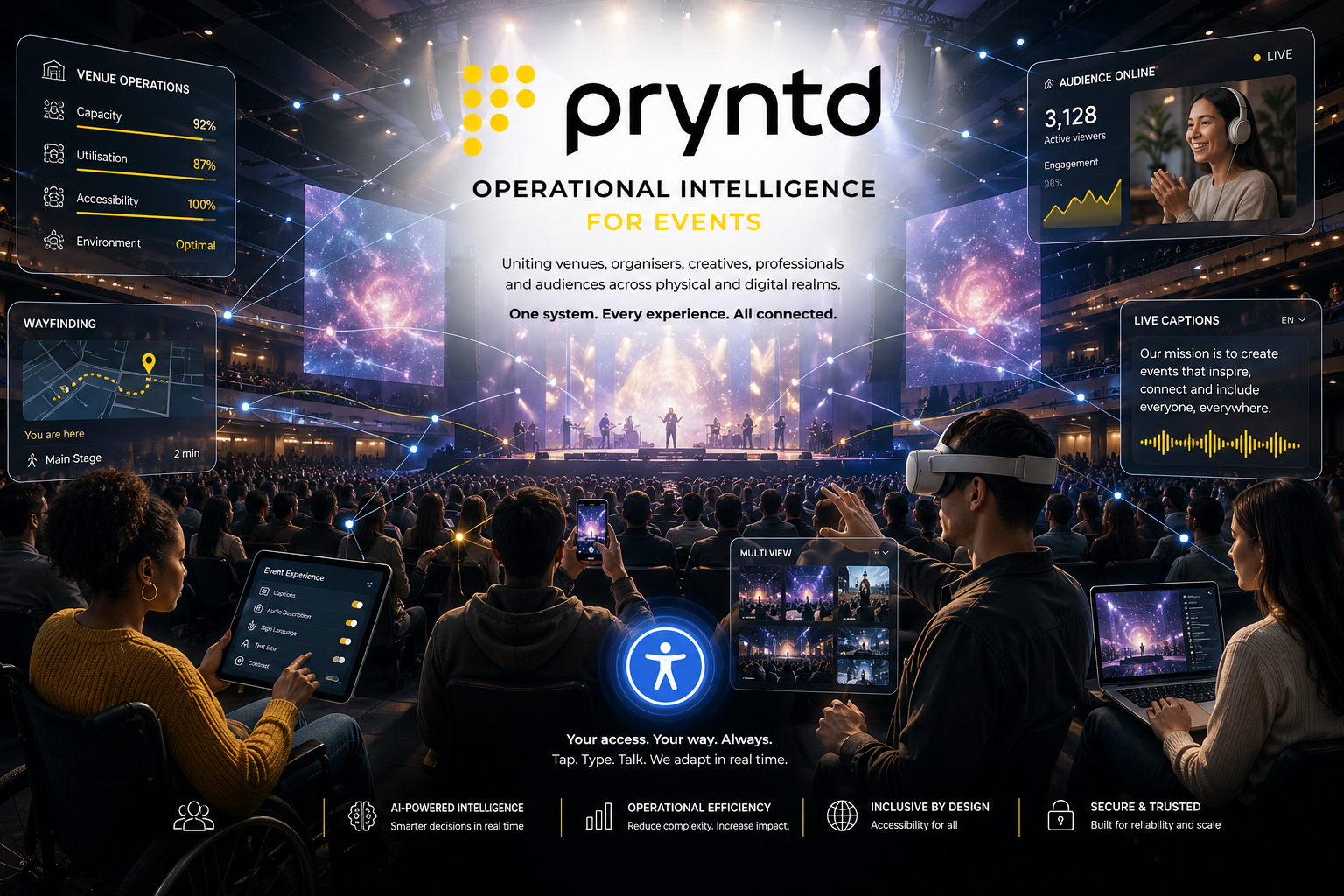
Pryntd is designed so every stakeholder can use the shared system, not only technical teams. Audiences, organisers, venues, creatives, sponsors, professionals, accessibility teams, and operational teams can all participate through one common environment.
Access is browser-native across smartphones, tablets, computers, TVs, and AR or VR devices. The system can work with existing content, existing cameras, existing production tools, and existing broadcast workflows.
Universal participation layer
From user-generated content to professional production pipelines, shared reality becomes easier to create, distribute, monetise, and coordinate.
Native Browser Access
Smartphones, tablets, laptops, desktops, TVs, AR devices, and VR devices can access experiences without forcing users into a closed ecosystem.
Stakeholder UGC
Audiences, venues, organisers, creatives, sponsors, and professionals can contribute content, data, media, and participation inside the shared system.
Existing Content Inputs
Landscape, portrait, 360 video, 3D assets, CAD files, Gaussian splats, VFX, live feeds, and spatial captures can become multidimensional experiences.
Everyday Capture Devices
Smartphones, tablets, DSLRs, 360 cameras, CCTV, Ring-style doorbells, venue cameras, and professional production systems can become input layers.
Creative Tool Compatibility
Unity, Unreal Engine, Blender, VFX pipelines, CAD workflows, 3D tools, and live production software can feed into the shared reality layer.
Broadcast & Streaming Ready
Works naturally with OBS, Streamlabs, and Restream-style workflows for distribution to YouTube, Facebook, Twitch, X, and 30+ native streaming platforms plus custom destinations.
Convergence Ready
Once the foundation exists, IoT, smart devices, sensors, agentic AI, spatial data, and automation can converge across physical and digital environments.
Stakeholder Outcomes
The goal is not more technology for its own sake. The goal is better outcomes for every stakeholder through access, coordination, intelligence, and value creation.
Smartphones
Computers
DSLRs
360 Cameras
Production Tools
TVs & Displays
UGC
Landscape Video
Portrait Video
360 Video
3D Assets
CAD
Gaussian Splatting
VFX
Smartphones
Tablets
DSLRs
360 Cameras
CCTV
Ring-Style Cameras
OBS
Streamlabs
Restream
YouTube
Facebook
Twitch
X
Unity
Unreal
Blender
IoT
Agentic AI
Smart Devices
Music and audiovisual culture became the wedge.
Music videos already contain narrative, emotion, movement, camera language, social distribution, repeat engagement, and monetisation. Pryntd transforms existing audiovisual foundations into multidimensional experience.
From passive media to coordinated infrastructure.
Pryntd’s dimensional framework explains how immersion evolves from presence into autonomous coordination across physical and digital systems.
4D
Presence
Media evolves from passive viewing into contextual immersion.
5D
Superpositioning
Physical and digital experience balance through sensory coordination.
6D
Entanglement
Virtual systems and physical environments influence each other in realtime.
7D
Autonomous Coordination
AI agents orchestrate journeys, spaces, workflows, and adaptive experiences.
Immersive behaviour is already mainstream. The language is fragmented.
Most people do not say they are using XR. They use camera effects, visual search, AR filters, virtual try-on, live translation, spatial maps, smart glasses, VR training, and AI-powered media tools.
The behaviour is already here. The problem is that the infrastructure, naming, creation workflows, data systems, and commercial models are still fragmented.
0
people use Google Lens monthly to search what they see
0
Snap AR Lens uses per day in Q1 2026
0
of Snapchatters engage with AR daily
0
XR device shipment growth in 2025
XR is the human interface layer. AI is the coordination layer.
Pryntd is not building XR as an isolated media format. It is laying the spatial and experiential foundation that AI agents can coordinate on top of.
Once environments can be mapped, understood, accessed, experienced, and monetised across physical and digital layers, AI can begin orchestrating journeys, accessibility, crowd movement, content, sponsorship, safety, scheduling, and operational decisions in realtime.
Human Layer
Audiences, organisers, venues, creatives, professionals, sponsors, and accessibility needs.
XR Layer
Spatial maps, immersive media, digital twins, audiovisual worlds, phones, headsets, and glasses.
AI Layer
Agents, recommendations, automation, predictive insight, personalisation, and realtime orchestration.
Value Layer
Participation, operational efficiency, accessibility, monetisation, intelligence, and measurable outcomes.
0
of executives see AI agent ecosystems as a significant opportunity
$0
projected AI agents market by 2033
0
of meeting planners are already using AI
0
of U.S. working hours could be affected by generative AI
Events reveal the full complexity of human coordination.
Pryntd starts with events because they compress the full coordination challenge into one environment: venues, organisers, creatives, professionals, audiences, sponsors, accessibility, security, logistics, communication, monetisation, and engagement.
That makes events the ideal proving ground for shared reality infrastructure before the model expands into wider human environments.
Shared Event Environment
One coordinated layer for participation, operations, intelligence, access, and value.
01
Venues
Capacity, access, safety, layout, crowd flow, energy, rooms, and physical operations.
02
Organisers
Planning, ticketing, scheduling, communications, reporting, and delivery control.
03
Creatives
Performances, visuals, sound, storytelling, immersive layers, and adaptive content.
04
Professionals
Production teams, technicians, vendors, contractors, staff, and service providers.
05
Audiences
Discovery, attendance, identity, participation, navigation, engagement, and memory.
06
Sponsors
Activation, attribution, audience insight, brand experience, and measurable value.
07
Accessibility
Adaptive interfaces, hybrid access, assistance, translation, captions, and inclusion.
08
Security
Safety, risk awareness, crowd signals, emergency response, and operational visibility.
09
Logistics
Movement, equipment, check-in, staffing, transport, scheduling, and resource flow.
10
Communication
Updates, guidance, alerts, team coordination, audience messaging, and feedback loops.
11
Monetisation
Tickets, upgrades, digital goods, sponsorship, content, commerce, and post-event value.
12
Engagement
Realtime participation, social sharing, immersive layers, gamification, and retention.
0
of event teams have fully integrated event tech and marketing or sales systems
0
of teams use multiple platforms for event data
0
of meeting planners are already using AI to plan and execute events
0
of global meetings professionals report using AI for their jobs
Events are the beachhead. Human environments are the market.
Pryntd does not move from events into other industries by abandoning events. Events are the proving ground where the infrastructure is validated before extending into every human environment where coordination, participation, accessibility, intelligence, and value are fragmented.
Once the infrastructure works inside complex live environments, the same model can extend horizontally into sectors where physical and digital participation needs to be coordinated intelligently.
Corporate & Enterprise
Conferences, launches, training, internal communications, hybrid collaboration, and measurable engagement.
Education & Training
Immersive learning, simulation, accessibility, assessment, and AI-guided participation.
Retail & Brand Experience
Product interaction, virtual try-on, experiential commerce, loyalty, and customer insight.
Tourism & Culture
Guided environments, museums, destinations, live translation, heritage layers, and hybrid attendance.
Healthcare & Accessibility
Patient navigation, inclusive communication, remote participation, adaptive assistance, and training.
Real Estate & Cities
Spatial previews, digital twins, venue intelligence, urban wayfinding, and environment-level coordination.
The technology is not the destination. The outcomes are.
01
Operational Efficiency
Fragmented systems become coordinated environments where workflows, data, communication, and decisions move together.

02
Increased Participation
Hybrid infrastructure expands attendance, engagement, access, and monetisation beyond physical limitations.

03
Accessibility as Infrastructure
Adaptive interfaces, multimodal interaction, intelligent assistance, and realtime augmentation become native.
Pryntd is building infrastructure for shared reality.
Infrastructure that enables creation, distribution, monetisation, participation, accessibility, coordination, intelligence, and interoperability across physical and digital environments simultaneously.
Language models understand text. Pryntd is building systems that understand human experience across physical and hybrid environments.
Think with Google,
Snap Inc. Q1 2026,
IDC XR Market Outlook,
Accenture Technology Vision,
Grand View Research AI Agents,
Cvent Event Statistics,
Restream Supported Platforms,
Streamlabs Restream Setup.