


Static access
Entry is treated as a transaction, while navigation, discovery, belonging, and follow-through are left to the participant.
Pryntd dynamically adapts environments, interfaces, recommendations, accessibility, social connection, and opportunity around human intent and context across physical and hybrid spaces.
Unlock shared reality
Define the category
20.3%virtual events CAGR to 2030
1 in 6people live with significant disability
80%of consumers identify as fans
Live environment state
Intent detectedConnect + learn
Access needLow sensory route
OpportunityFounder table nearby
Not ticketing. Participation infrastructure.
Not event management. Adaptive human access.
Not livestreaming. Shared reality.
Every event is a system of access, but the infrastructure around it is split into registration, content, venue operations, accessibility workarounds, social discovery, commerce, community, and hybrid viewing. People arrive with intent. The system responds with disconnected tools.
Entry is treated as a transaction, while navigation, discovery, belonging, and follow-through are left to the participant.
Grand View Research reports 50% of organizers struggle with Q&A moderation and 46% cite networking as difficult in hybrid models.
WHO estimates 1.3 billion people, or 16% of the world, experience significant disability.
People meet, learn, buy, and belong in one moment, then lose continuity across platforms and future environments.
The highest-value moments are often informal: the person nearby, the session missed, the creator drop, the investor in the room.
Event teams are asked to personalize at scale without a unified intelligence layer that can adapt in real time.
Projected global event management market by 2033, according to Grand View Research.
Event professionals say AI lets them spend more time on high-value work, according to Cvent.
Marketers plan to host more small events, reported by Cvent from Forrester research.

Pryntd does not reduce people to a buyer record. It recognizes evolving participation states, then adapts the interface, environment, and opportunity layer around the person’s current intent.
Participation progression
Attendee to Audience to Connector to Superfan to Contributor. The system learns as people participate, not only when they purchase.
Attendee
Audience
Connector
Superfan
Contributor
They need low-friction entry, clear routing, timely context, and confidence that the environment can accommodate them.
Intent
Arrive, orient, choose a path.
Behavior
Checks schedule, enters venue, asks where to go.
UI adaptation
Accessible route cards, entry status, nearby next-best actions.
Value system
Trust, comfort, timing, autonomy.

Pryntd is not a feature stack. It is a set of adaptive access layers that turn physical and hybrid environments into responsive systems for participation.

Entry, navigation, wayfinding, accessibility adaptation, spatial intelligence.
entryroutescapacitysensory paths

Hybrid participation, multi-perspective viewing, remote presence, replayability, XR compatibility.
remoteXRreplaypresence

Networking, matchmaking, collaboration, community systems.
matchesgroupsintroscontinuity

Jobs, investors, partnerships, VIP experiences, recommendations, intelligent discovery.
deal flowjobsVIPcollabs

Immersion, emotional participation, shared moments, presence.
energypresencememoryemotion

Contextual learning, sessions, insights, dynamic information layers.
contextnotesinsighttranslation
Pryntd continuously interprets intent, behavior, accessibility needs, spatial relationships, social dynamics, and participation patterns, then adapts recommendations, interfaces, perspectives, opportunities, content, and navigation.
SignalIntent
SignalBehavior
SignalContext
SignalAccessibility needs
SignalSpatial relationships
SignalSocial dynamics
AI brain
Adaptive participation engine
Real-time orchestration across human intent and environment state.
AdaptationRecommendations
AdaptationNetworking
AdaptationInterfaces
AdaptationOpportunities
AdaptationPerspectives
AdaptationNavigation
Music, corporate, education, retail, cultural, and sports environments each contain different behaviors, incentives, accessibility needs, and opportunity systems. Pryntd changes the participation model to match the environment.

Music logic
Pryntd prioritizes emotional presence, fan identity, live creator moments, crowd-safe routing, exclusive drops, and replayable memories that keep the community alive after the show.
Recommendations
Best stage route, artist room, friends nearby.
Opportunity
Limited merch drop and post-show creator access.
Interface
High-contrast live mode with crowd-safe alerts.
Participation
Superfan identity, memory capture, social replay.
Pryntd continuously generates people to meet, communities to join, sessions aligned with goals, nearby exclusive opportunities, creators matching interests, potential collaborators, and live moments happening now.
It is a persistent participation identity that travels across events, venues, communities, digital spaces, and physical spaces while remembering access needs, relationships, preferences, moments, and opportunities unlocked.

Met28 people across 4 communities
ExploredXR culture, founder dinners, low-sensory viewing
NeedsCaption-first content, step-free routes, quiet reset areas
UnlockedCreator access, replay notes, partner invite
Relationship memory persists after the environment closes.
Venue, session, remote, replay, and social graph become a coherent history.
Pryntd remembers accessibility modes, pacing, interests, and interface choices.
Introductions, communities, learning paths, and VIP experiences carry forward.

Shared reality visual engine
Pryntd turns environments into living spatial systems: digital twins, interaction overlays, adaptive perspectives, remote inclusion, and environmental intelligence working as one shared reality layer.
Not dashboards. Not passive streams. A responsive field of access where people can move, learn, connect, contribute, and belong from wherever they participate.
Traditional systems manage isolated moments. Pryntd manages adaptive participation across the full human journey.
Accessibility is not compliance, an add-on, or a settings panel. It is foundational infrastructure for participation. When environments adapt better for disabled people, they become clearer, safer, calmer, and more useful for everyone.

Foundational access
Millions remain excluded from physical and digital participation because environments do not adapt. Pryntd treats adaptive access as a core operating layer, not an exception path.
Contrast, type scale, layout density, captions, translation, and input modes.
Low-sensory routes, quiet zones, crowd density, lighting and audio guidance.
Step-free routes, proximity support, venue intelligence, and live changes.
Multi-perspective access, replay, contextual notes, and inclusive presence.
Participation evolves into belonging, identity, loyalty, contribution, and community. Deloitte reports around 80% of consumers identify as fans, and fans spend 27% more on streaming than non-fans. The economic center is sustained participation.

Continuity loop
Pryntd remembers moments, people, creators, replays, social graphs, and contribution signals so participation compounds over time.
01Belonging
Participants discover people and communities aligned with their intent.
02Memory
The system preserves moments, replays, notes, creator drops, and social links.
03Contribution
Superfans become contributors through content, curation, advocacy, and community action.
04Return
The next event starts with context, not from zero.
Pryntd is designed to sit above and between existing systems: ticketing, venue operations, CRM, streaming, collaboration, community, and content platforms.
Unified access layer
Ticketmaster
Eventbrite
Zoom
Teams
YouTube
Pryntd
Twitch
Venue systems
CRM systems
Streaming platforms
Community tools
Accessibility services
By transforming fragmented access into adaptive infrastructure for shared reality, Pryntd enables humans, communities, venues, organisers, creators, and audiences to participate more intelligently across physical and hybrid environments.
This is not the future of ticketing. This is the future of human participation.
Adaptive access infrastructure for human participation.
1.3B people, 16% of the global population, experience significant disability.
Global virtual events market projected to grow from $98.1B in 2024 to $297.2B by 2030.
Global event management market projected to reach $2.09T by 2033.
AI is becoming operational, relevance is driving engagement, and personalization is becoming attendee-led.
Gartner predicts more than 20% of workplace apps will use AI-driven personalization algorithms by 2028.
Fans are an economically meaningful segment with sustained engagement and higher spend.
Sign in once and keep your access, activity and intelligence connected across Pryntd.

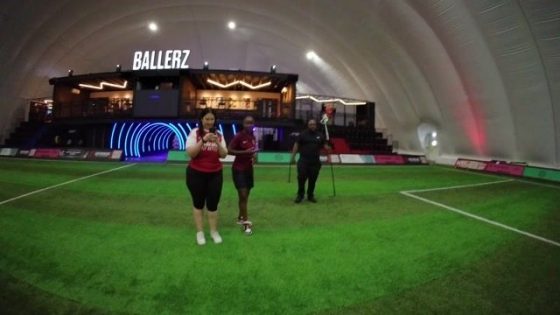
Virtual Tour
Search your Connect connections or invite by email.
Collaboration activity will appear here as people join and work on this tour.
Request access to collaborate on this Virtual Tour.
People collaborating on this Virtual Tour
Choose what helps. You do not need to declare a disability.
These preferences describe how you want the experience to work. Pryntd does not require a diagnosis.
Readiness is guidance for the current surface, not a legal certification.
Minimise to a single A at any time. Blue means accessibility adaptations are active; white means no adaptations are currently selected. Accessibility remains available even when the launcher is hidden. Restore it from Pryntd’s + menu, any Accessibility control, or Alt + A.