Pryntd
Shared reality infrastructure for physical, digital, hybrid, immersive, and spatial human experiences.
Core Positioning
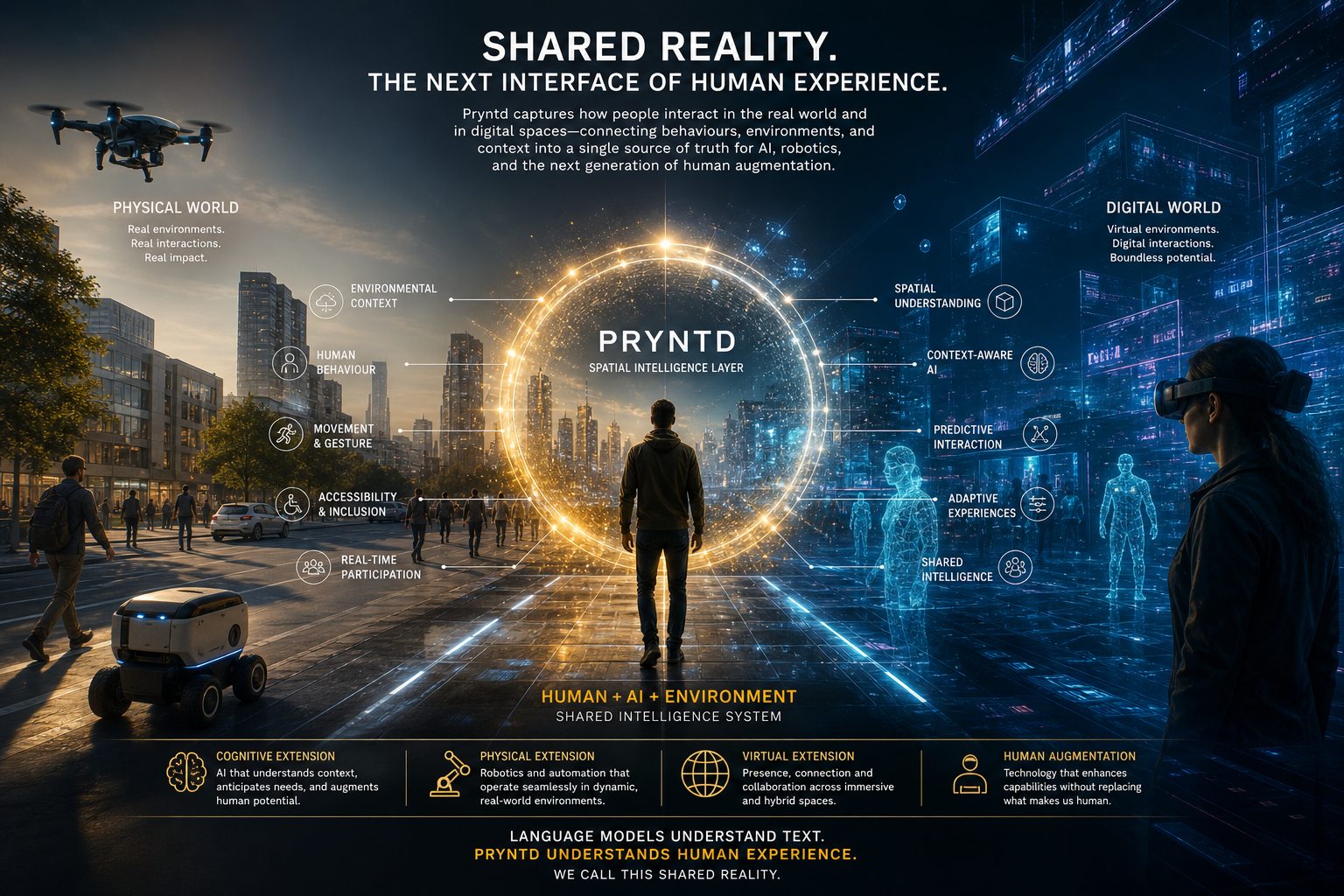
The browser is the gateway to shared reality.
Pryntd is building the operating layer for human environments where participation, accessibility, presence,
intelligence, commerce, creativity, and coordination converge. It begins with ordinary devices, then scales
upward into optional immersive, spatial, sensory, robotic, and AI-coordinated layers.
Traditional experience systems fragment everything.
- Audiences, devices, ticketing, streaming, and accessibility are separated.
- Networking, communications, commerce, and operations live in disconnected tools.
- Physical venues rarely understand remote audiences in real time.
- Remote participants rarely feel socially, spatially, or emotionally present.
- Pryntd unifies these layers into one adaptive infrastructure system.
The Dimensional Model
From 2D access to 7D extended presence.
Pryntd evolves ordinary browser-based participation into adaptive, multi-perspective, multi-sensory,
AI-coordinated realities.
Accessible Digital Presence
The universal accessibility layer.
Standard browser-based experiences: livestreams, ticketing, captions, translation, accessibility overlays,
adaptive UI, real-time transcription, social interaction, contextual metadata, and multi-camera switching.
No special hardware is required.
Smartphones
Tablets
Browsers
Smart TVs
Laptops
Spatial Awareness
Users begin interacting with environments spatially.
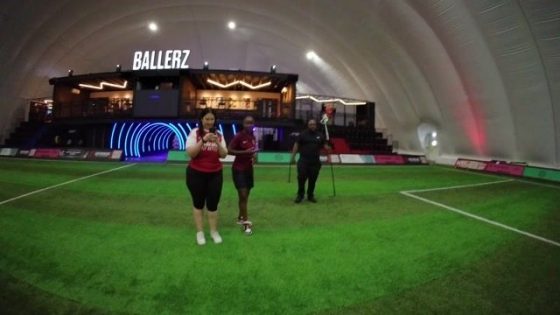
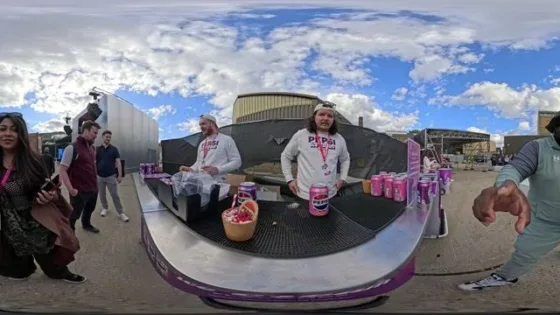
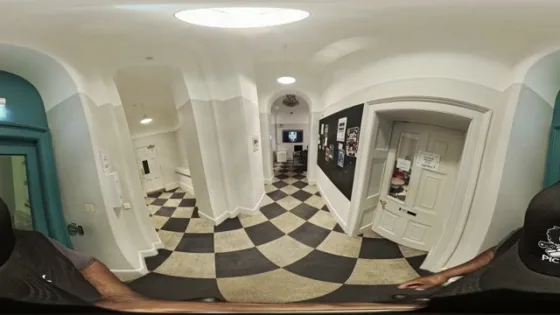
Pryntd adds 360 viewing, immersive navigation, spatial audio, digital twins, venue mapping, avatar
positioning, directional engagement, contextual overlays, and immersive replay.
360 Cameras
LiDAR
Digital Twins
XR Headsets
Volumetric Capture
Environmental Interaction
Experiences react to human presence and environmental context.
Real-time audience synchronisation, crowd interaction, environmental adaptation, AI contextual awareness,
biometric integrations, haptic responses, gesture interaction, wearable input, and responsive spaces.
Wearables
Haptics
IoT Sensors
Smart Lighting
Robotics Interfaces
Shared Reality
Physical and digital realities merge into synchronised participation systems.
This is Pryntd’s core category: hybrid participation, real-time multi-perspective viewing, simultaneous
physical and remote presence, AI-driven coordination, social overlays, immersive watch parties,
contextual meeting systems, collaborative presence, and multi-user synchronisation.
Hybrid Presence
AI Coordination
Watch Parties
Networking
Accessibility Intelligence
Autonomous Human Environment Intelligence
The environment becomes intelligent.
AI agents coordinate accessibility, movement, networking, engagement, commerce, environmental adaptation,
safety, crowd flow, operational efficiency, predictive intelligence, intelligent routing, AI moderation,
and adaptive sensory systems.
AI Event Copilots
Computer Vision
Edge AI
Realtime Translators
Operational Dashboards
Human Augmentation & Extended Presence
The future layer of embodied, cognitive, sensory, and robotic participation.
Pryntd evolves toward infrastructure for brain-computer interfaces, sensory augmentation, robotic
telepresence, AI-assisted perception, emotional computing, memory-enhanced environments, autonomous
digital proxies, remote embodied participation, and persistent shared environments.
BCI
Neural Interfaces
Robotic Avatars
Full Body Haptics
Augmented Cognition
Device Philosophy
Pryntd does not require expensive hardware to participate.
Unlike many XR systems, Pryntd starts from browser accessibility and then scales upward into optional
immersion. A phone is enough. A laptop is enough. A television is enough. A browser is enough.
Lower friction
People can enter instantly from devices they already own.
Higher adoption
Immersion becomes optional enhancement, not a participation barrier.
Accessibility by default
Captions, translation, adaptive interfaces, and AI assistance begin at the foundation.
Future-proof scale
The same infrastructure can support browsers, XR, haptics, robotics, and spatial computing.
Business Infrastructure Layer
The operating system for hybrid experiences.
For creators, venues, and professionals, Pryntd coordinates production, accessibility, media, commerce,
spatial intelligence, audience engagement, and real-time operations.
Production
360 cameras, DSLR integration, RTMP/SRT ingest, real-time transcoding, immersive encoding, spatial audio, and livestream orchestration.
Spatial Capture
Volumetric capture, LiDAR scanning, digital twin generation, venue mapping, sensory metadata, and Matterport-style workflows.
AI Operations
AI subtitles, accessibility transcription, moderation, real-time analytics, operational dashboards, routing, and contextual automation.
Accessibility Foundation
Accessibility is not a feature. It is the infrastructure model.
Pryntd adapts environments to people, rather than forcing every person to adapt to the same environment.
Vision Access
Audio description, contextual overlays, contrast-aware UI, spatial guidance, and AI-assisted perception.
Hearing Access
Adaptive captions, real-time transcription, translation, visual cues, and spatial sound alternatives.
Mobility Access
Remote participation proxies, venue routing, hybrid attendance, digital twins, and embodied telepresence pathways.
Neurodiversity
Sensory tuning, calmer viewing modes, personalised interfaces, pacing controls, and AI assistance.
Language Access
Real-time translation, multilingual captions, contextual summaries, and AI-generated interpretation layers.
Remote Access
Multi-perspective viewing, social overlays, watch parties, contextual networking, and persistent hybrid participation.
Commercial Outcome
More reach. More intelligence. More participation.
Pryntd creates value for venues, organisers, artists, brands, educators, governments, smart cities, disabled
people, audiences, and professionals.
2–5x
potential audience reach through hybrid participation
24/7
persistent digital and spatial engagement after the live moment
AI
coordination across accessibility, commerce, safety, and operations
1
unified layer for access, presence, intelligence, and shared reality
Language models understand text.
Pryntd understands human experience across physical and hybrid environments.
We call this shared reality.