Loading...
Pryntd Shared Reality Infrastructure

Immersive Technologies Were Supposed To Solve Organisational Challenges

But most organisations were sold immersive experiences before they had immersive infrastructure.

Pryntd turns immersive technology into an operational layer for venues, events, creators, professionals and audiences.

Operational visibility
Live
Venue, audience and remote participation signals in one intelligence layer.
Hybrid participation
Unified
Physical and digital audiences coordinated as one shared environment.
Accessibility
Native
Inclusion embedded into the operating model, not added as a separate workflow.
Immersive ROI
Practical
Immersive technology connected to revenue, data, efficiency and reach.
Experience the operating layer

Immersion Becomes Convincing When Stakeholders Can See The Environment

The strongest argument for immersive technology is not novelty. It is visibility.

When decision makers can see a venue, understand movement, inspect audience context and connect remote participation to the physical environment, immersive technology stops feeling optional.

It becomes the interface for operational understanding.

Pryntd immersive showcase

Order by

Change language

Nothing found!

Waiting for permission

Listening...

Didnt recognize that. Tap microphone to try again.

1 26 frontpage
0

1 26 frontpage

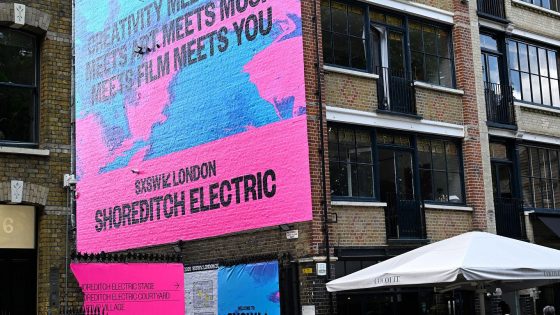
Ray Ban SXSW London Day Party

Why immersive technology matters

Their Problems Are Not Flat. They Are Environmental.

Venues and event organisations do not only manage content. They manage people, space, risk, movement, participation, staffing, accessibility, sponsors, production and revenue pressure at the same time.

That is why immersive technology is key. It gives organisations a spatial interface for problems that cannot be solved properly through spreadsheets, static dashboards or isolated livestreams.

Audience Decline

The challenge: Physical-only attendance models are under pressure from changing audience behaviour, convenience expectations and remote-first habits.

How immersive technology helps: It expands the event beyond the room, creating hybrid presence, remote participation and new digital access points without reducing the value of being there physically.

Operational Overload

The challenge: Teams are forced to coordinate ticketing, access, production, safety, engagement and communication through disconnected tools.

How immersive technology helps: A spatial operating layer lets teams understand what is happening across the environment in real time, reducing duplicated work and reactive decision making.

Accessibility Failures

The challenge: Accessibility is often handled as a separate compliance workflow, so it competes against urgent operational pressures.

How immersive technology helps: Adaptive digital environments can provide remote access, contextual communication, sensory options and participation parity as native infrastructure.

Weak Sponsor ROI

The challenge: Sponsors want measurable engagement, not passive logo placement or vague post-event reporting.

How immersive technology helps: Immersive participation creates measurable interactions, digital touchpoints, audience behaviour insight and persistent sponsor environments.

Safety And Compliance Pressure

The challenge: Venues need better crowd intelligence, risk visibility and operational readiness as security expectations increase.

How immersive technology helps: Digital twins, live overlays and spatial intelligence make movement, density, access and escalation pathways easier to understand and coordinate.

Disconnected Hybrid Production

The challenge: Hybrid is often treated as livestream plus chat, producing weak participation and operational complexity.

How immersive technology helps: Shared environments allow remote and physical audiences to participate within the same event logic, not as separate audiences on separate platforms.

Why immersive technology has not delivered yet

The Technology Was Powerful. The Architecture Was Wrong.

Immersive technology did not fail because the idea was weak. It failed because it was deployed as isolated experiences instead of integrated infrastructure.

Most immersive products added another layer for teams to manage. They did not reduce operational complexity. They increased it.

Multiple disconnected software dashboards representing fragmented immersive technology systems
Fragmented Immersive Stack
Separate platforms Unclear ROI Staff burden Low adoption

Too Experience-Led

Immersive technology was positioned as spectacle, content or novelty rather than a tool for solving operational pain.

Too Siloed

VR, livestreaming, ticketing, accessibility, analytics, digital twins and venue systems usually operate as separate products.

Too Hard To Adopt

Headsets, heavy production requirements, specialist hardware and complex workflows made immersive systems difficult to scale.

Too Detached From Operations

Many immersive deployments did not connect to the real decisions venues and organisers make during live operations.

Too Weak On Accessibility

Accessibility was added after the experience was designed, instead of being built into the environment from the start.

Too Difficult To Justify

Without clear links to revenue, efficiency, audience growth and sponsor value, immersive technology stayed experimental.

The Pryntd breakthrough

Pryntd Makes Immersive Technology Operationally Useful

Pryntd is not trying to sell organisations another immersive add-on. Pryntd solves the blockers that stopped immersive technology from becoming critical business infrastructure.

It turns immersive technology into a shared reality layer: browser-native, accessible, spatial, measurable and connected to real organisational outcomes.

From Novelty To Necessity

Pryntd reframes immersive technology around operational visibility, hybrid participation, accessibility, monetisation and stakeholder coordination.

From Siloes To Convergence

Pryntd unifies the logic of digital twins, hybrid access, creator environments, audience data, accessibility and operational dashboards.

From High Friction To Browser Native

Pryntd lowers adoption barriers by making immersive participation accessible through familiar devices and web-based environments.

From Bolt-On Access To Native Inclusion

Pryntd embeds accessibility into the same infrastructure used for crowd intelligence, remote access, communication and adaptive participation.

From Passive Audiences To Participation Systems

Pryntd helps audiences participate across physical and digital spaces, creating new engagement, reach and monetisation models.

From Unclear ROI To Measurable Value

Pryntd connects immersion to business outcomes: efficiency, attendance, sponsor intelligence, accessibility reach and operational decision making.

Shared reality as operating infrastructure

One Layer For Participation, Operations And Intelligence

An event is not just a production. It is a temporary human environment. A venue is not just a building. It is a live operating system of movement, attention, access, risk and participation.

Shared reality gives organisations an interface for that environment.

Pryntd Shared Reality Layer
Venues
Audiences
Digital Twins
AI Orchestration
Accessibility
Hybrid Participation
Before versus after

Pryntd Transforms Immersive Technology From A Feature Into Infrastructure

The stakeholder question is not “is immersive technology interesting?” The real question is “can immersive technology help us run better, reach more people, reduce exclusion and create new value?”

With Pryntd, the answer becomes yes.

Overwhelmed operations team using fragmented tools
Before Pryntd Immersive tools sit beside operations, creating extra workflows and unclear value.
Large intelligent venue with audience participation and operational overlays
After Pryntd Immersive technology becomes the shared interface for venue intelligence, hybrid participation and inclusive access.
Stakeholder value

The Same Infrastructure Solves Different Critical Problems

Venues

Problem: Revenue pressure, operational complexity, safety readiness and accessibility expectations.

Pryntd outcome: Intelligent venue environments with spatial visibility, hybrid monetisation and access built in.

Event Organisers

Problem: Fragmented production, sponsor demands, audience decline and weak hybrid engagement.

Pryntd outcome: Unified orchestration across physical and remote participation with measurable engagement layers.

Creatives

Problem: Limited reach, platform dependency and inaccessible immersive distribution.

Pryntd outcome: Browser-native immersive storytelling that can reach audiences without specialist hardware.

Professionals

Problem: Coordination gaps, lost context and poor visibility across complex live environments.

Pryntd outcome: Shared operational tooling for collaboration, spatial context and realtime decision making.

Audiences

Problem: Exclusion, travel limitations, sensory barriers and passive digital attendance.

Pryntd outcome: Adaptive participation across physical and remote spaces with more equitable access.

Sponsors

Problem: Passive branding and limited visibility into engagement.

Pryntd outcome: Immersive sponsor environments, measurable participation and richer audience intelligence.

The market direction

Hybrid Participation Is Becoming Permanent

Research shows hybrid participation is not a temporary event format. It is becoming a long-term operating model for how people gather, attend, engage and access experiences.

This confirms the core Pryntd thesis: the future of events is not only physical, not only digital and not only immersive. It is shared reality.

Hybrid formats
0%
Events now operating as hybrid formats.
Growing demand
0%
Organisers reporting increased hybrid demand.
Permanence
0%
Professionals believing hybrid events are permanent.
Registration lift
0%
More registrations than physical-only events.
Accessibility becomes infrastructure

Inclusion Scales When It Stops Competing Against Operations

Venues and organisers care about accessibility, but operational gravity dominates decision making. Staffing, security, revenue, hybrid production, sponsor value and compliance all compete for attention.

Pryntd changes the architecture. The same immersive systems needed for operational intelligence also enable adaptive access, remote participation, sensory options, contextual communication and participation parity.

Accessibility stops being added. It becomes native system behaviour.
Inclusive team and audience participating through accessible digital systems
Adaptive Participation
Remote access Multimodal content Contextual support Participation parity
Final positioning

The Future Of Human Participation Is Shared Reality

Immersive technology is not important because it looks futuristic. It is important because the critical problems facing venues and events are spatial, operational, hybrid and human.

Pryntd solves the reasons immersive technology has not delivered yet: fragmentation, friction, accessibility gaps, unclear ROI and disconnection from live operations.

By converging participation, intelligence, accessibility, monetisation and coordination into one shared operational layer, Pryntd makes immersive technology useful where it matters most.

Language models understand text. Pryntd understands human experience across physical and hybrid environments where people gather. We call this shared reality.
0