
AI driven shared reality that adapts to human needs across physical and hybrid environments.
Pryntd evolved immersive technology beyond interaction by introducing agentic AI capable of augmenting human experience dynamically, contextually and accessibly in realtime.
2D created viewing. 2DX created interaction. 3D created immersive space. 4D created contextual hybrid environments. But something fundamental was still missing.
Reality itself still remained passive. Even intelligent environments required manual navigation, cognitive effort, interface understanding, physical capability and sensory interpretation.
The burden still sat on the human.

Human beings experience reality through sight, sound, touch, smell and taste. Yet human experience is uneven. Some people cannot see clearly, cannot hear fully, cannot process environments easily, experience sensory overload, struggle with navigation, feel cognitive fatigue or require contextual support.
 Capability is not evenly distributed
 Immersion must become support
 Access is the intelligence test
Pryntd introduced agentic AI directly into shared reality infrastructure. The interaction layer became natural. People could speak, type, tap icons, gesture or interact contextually, while the system continued adapting to accessibility needs, environmental conditions, participation behaviour, realtime context, sensory requirements and operational situations.
For users who need support, the AI actively augments the environment. For users who do not require assistance, the augmentation quietly disappears. The system only intervenes when necessary.
5D allows AI to augment physical environments, hybrid environments, immersive environments and digital experiences. It creates intelligent venues, adaptive events, responsive spaces, augmented collaboration, AI assisted navigation and realtime contextual support.
The environment itself begins participating in the experience.
The use of AI driven shared reality systems to dynamically enhance human experience across physical and digital environments.

Accessibility is no longer a separate feature. Accessibility becomes the foundation of intelligent environments, because the most intelligent systems are those capable of adapting to diverse sensory, cognitive, physical, communication and participation needs.
Interfaces can simplify, translate, caption, guide and reduce load in response to real human conditions.
People are not asked to overcome the environment alone. The environment begins meeting them halfway.
Accessibility becomes the proof that intelligence is real, because real intelligence includes people.
Data references: GOV.UK Family Resources Survey 2024 to 2025 and Business Disability Forum Purple Pound estimate.
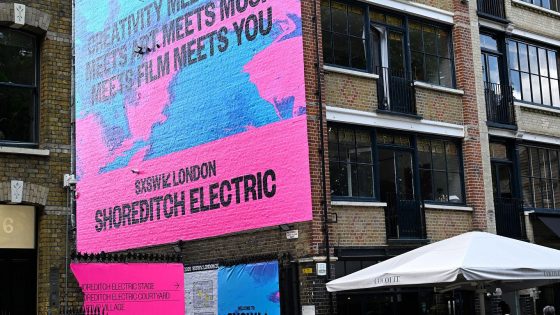
Events are sensory dense, emotionally intense, operationally complex, socially dynamic, physically challenging and accessibility sensitive. They are the perfect beachhead for 5D Augmenting Reality because every stakeholder needs live support.
Pryntd’s AI augmentation layer can guide attendees, personalise experiences, adapt interfaces, interpret environments, coordinate accessibility, optimise participation, augment communication, simplify navigation and surface contextual information.
Agentic Shared Reality orchestration
5D represents the beginning of agentic reality, where environments no longer simply display information. They assist, coordinate, adapt, optimise, augment and participate.
This marks the first stage where AI begins operating as an environmental intelligence layer.

Each dimensional layer increases immersion, interaction, contextual awareness, operational intelligence, accessibility, adaptation, participation and human augmentation.
Reality was represented as something to view.
People began influencing what they saw.
Digital space gained depth, presence and embodiment.
Physical and digital environments began sharing context.
Reality began adapting to human need in realtime.
The evolution of shared reality is not about escaping the human experience. It is about enhancing it.
Pryntd believes the highest form of immersive technology is technology that understands people, adapts to people, supports people, includes people and augments people.
As physical and digital environments converge, intelligence will no longer live only inside devices. It will live inside reality itself.
Pryntd is building the infrastructure layer augmenting human experience across shared reality.