

Pryntd Super Codex 002
Shared Reality Chapter Two
Browser-Native Spatial Infrastructure
Extending Reality
The convergence of 3D into shared reality infrastructure. Not one format. Not one engine. Not one device. A new interoperable layer for space, presence and participation.
2D
2DX
3D
3D
Extended Reality
Pryntd’s definition of 3D is not limited to traditional computer graphics. It is the convergence of all spatial systems into browser-native shared reality infrastructure.
Core Thesis
The future is not one type of 3D. The future is the convergence of all 3D systems into one shared reality layer.
For decades, spatial technologies evolved in isolation. Game engines became worlds. CAD became precision. VFX became spectacle. XR became hardware. Digital twins became operational mirrors. 360 capture became immersive media. Livestreaming became presence at scale.

Game engines evolved into worlds

Architecture evolved into precision

XR evolved into presence
3D evolved as tools. Pryntd evolves 3D into infrastructure.
Shared reality begins when spatial systems stop behaving like separate industries and start behaving like a connected layer. Pryntd is built on the belief that every spatial workflow is already moving toward the same destination: browser-native environments that can be accessed, shared, interacted with and extended by anyone.
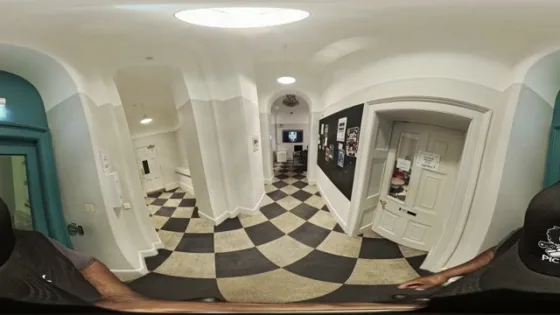
A Blender artist, a Unity developer, an Unreal Engine world builder, an architect using CAD, a creator filming with a 360 camera, a venue scanning a digital twin, a livestream operator, a VFX studio and a Gaussian splatting workflow are not separate categories of the future. They are all building spatial realities.
Pryntd converges them into one interoperable layer. The browser becomes the portal, renderer, interaction layer, participation layer, distribution layer, accessibility layer and orchestration layer.
2D
Passive flat media. Images, pages, posts and videos designed mainly to be consumed.
2DX
Interactive user-generated landscape and portrait experiences. Flat media becomes participatory.
3D
Spatial environments and immersive systems. Worlds, captures, simulations, scenes and mapped space.
XR
Extended Reality: the convergence of all spatial systems into browser-native shared reality.
Why 3D Fragmented
The 3D industry did not fail to converge. It simply had no common layer to converge into.

Software silos
Each spatial discipline created its own tools, workflows, file types and production assumptions.

Access friction
Spatial computing became powerful, but ordinary users were often kept outside the experience.

Infrastructure gap
The missing layer was not another isolated engine. It was shared spatial infrastructure.
Game engines evolved around performance, physics, shaders and interactive worlds. Architecture evolved around precision, measurement, planning and construction. CAD evolved around engineering intent. VFX evolved around cinematic control. XR evolved around devices. Livestreaming evolved around distribution. Digital twins evolved around operations. Scanning evolved around capture.
Each system solved a real problem. Each became powerful. But each also developed its own file types, pipelines, assumptions, hardware dependencies, licensing logic and distribution constraints.
The result was a paradox: the world had more 3D capability than ever, yet fewer ordinary people could participate in it directly. 3D became abundant inside specialist ecosystems and scarce inside everyday browsers.
The missing piece was not another isolated engine. The missing piece was shared spatial infrastructure.
Game EnginesPowerful worlds, often locked inside specialist runtimes and production pipelines.
VFX PipelinesHigh-fidelity spatial craft built for rendering, compositing and post-production control.
ArchitectureSpatial precision separated from public participation and live browser distribution.
CAD SystemsEngineering truth trapped behind complex tools and closed professional workflows.
XR PlatformsImmersive interaction dependent on device ownership and platform lock-in.
Digital TwinsOperational mirrors of physical space, disconnected from creators and audiences.
360 CaptureAccessible immersive media, rarely connected to deeper interaction.
ScanningReality converted into data, but not always into participatory experience.
LivestreamingReal-time presence delivered as flat video instead of spatial environment.
The Convergence Of Spatial Systems
Pryntd transforms disconnected 3D ecosystems into a unified spatial web.
Extended Reality is not a headset category. It is an infrastructure category. It is what happens when VR, AR, MR, digital twins, Gaussian splatting, volumetric media, CAD, VFX, Unreal Engine, Unity, Blender, 360 capture, 3D scanning and livestream environments are no longer treated as separate destinations.
Augmented Reality
Virtual Reality
Mixed Reality
Spatial Computing
360 Environments
Digital Twins
Gaussian Splatting
Photogrammetry

Browser-Native Shared Reality Layer
One accessible runtime for spatial experience, interaction, commerce, collaboration, publishing and participation.
CAD Systems
VFX Pipelines
Blender Workflows
Unreal Engine Environments
Unity Projects
Volumetric Capture
Spatial Livestreams
IoT Spatial Mapping


Extended Reality is the moment spatial media becomes interoperable public infrastructure.
In Pryntd’s model, a spatial environment is not defined by its source. A 360 capture, a Gaussian splat, a CAD model, an Unreal scene, a digital twin, a scanned venue, a volumetric performance and a live camera reconstruction can all become part of the same shared layer.
This creates interoperable environments, persistent experiences, hybrid participation, immersive commerce, real-time collaboration, adaptive accessibility and spatial intelligence. The value is not only visual immersion. The value is orchestration.
When spatial systems converge, a user does not need to understand the production stack behind an environment. They simply enter, interact, move, participate, buy, learn, attend, collaborate or build.
Why The Browser Wins Again
The browser has already unified the major transitions of the internet. Spatial computing is next.
The browser unified publishing, video, commerce, communication, social interaction and software distribution. Now the browser is becoming the runtime for spatial computing.

The browser unified software access

Communication became web-native

Distribution became linkable
PublishingPages became instantly reachable.
VideoPlayback became embedded in daily life.
CommerceTransactions became native to the web.
CommunicationMessaging, meetings and collaboration became browser-accessible.
Social InteractionIdentity, community and content became networked.
SoftwareApplications moved from installation to access.
CreationProduction moved from studios into user hands.
Spatial RealityThe next runtime is shared environment.
Spatial computing follows the same pattern. It cannot become civilisation-scale if it remains locked behind downloads, devices, engines and closed distribution. It becomes mass infrastructure when it becomes linkable, embeddable, accessible and participatory.
No downloads. No platform lock-in. No hardware dependence as the default entry condition. The browser becomes the operating system for shared reality because the browser is already the most successful distribution layer humanity has built.
Pryntd does not treat the browser as a compromise. Pryntd treats the browser as the convergence point: the place where spatial systems become reachable enough to matter at population scale.
The browser becomes the portal, the renderer, the interaction layer and the operating system for shared reality.
User-Generated 3D
The next spatial web cannot be built only by studios. It has to be built by everyone.
Shared reality becomes meaningful when creation expands beyond professional pipelines. People should be able to generate spatial experiences from the tools already in their hands and the workflows they already understand.


This is user-generated spatial reality. Not closed infrastructure.
The creator does not need to think like a platform owner. The venue does not need to become a game studio. The livestream operator does not need to rebuild the web. The architect does not need to abandon CAD. The world builder does not need to leave their engine. Pryntd’s role is convergence.
User-generated 3D means the capture of the world, the design of worlds, the simulation of worlds and the broadcasting of worlds can all become shared reality inputs. The source can be professional, amateur, live, scanned, rendered, reconstructed or generated.
The category shift is profound: spatial creation moves from isolated production into networked participation. Reality becomes extensible because the tools of extension become ordinary.
Events As The Beachhead
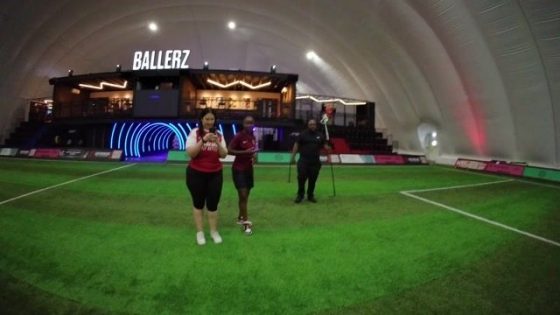
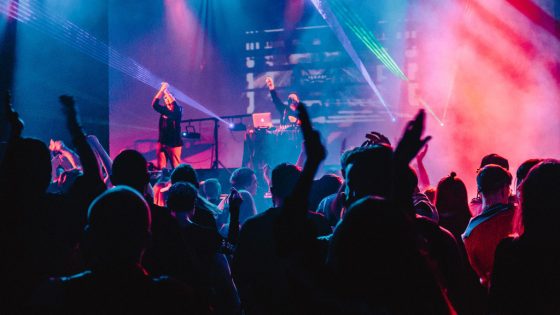
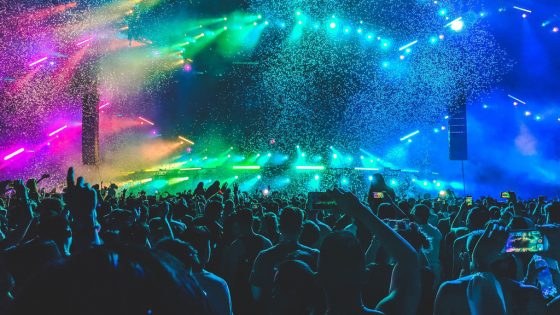
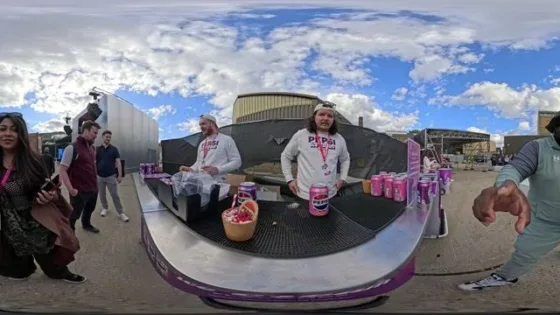
Events are the first true shared reality environments because events already contain the whole convergence.
Events naturally combine physical space, audiences, livestreams, creators, commerce, participation, hybrid presence and real-time interaction. They are not just content moments. They are living systems.
Physical Venue
Spatial Livestream
Audience Participation
Creator Layer
Commerce
Shared Reality Environment
Venues become intelligent spatial systems.

The room is no longer just a location. It becomes a mapped, interactive, browser-accessible environment.
Livestreams become immersive environments.
The stream is no longer only a flat feed. It becomes a spatial context that can be explored, extended and participated in.
Audiences become participants.
Presence shifts from watching to entering, reacting, buying, moving, collaborating and influencing the environment.
Creators become world builders.
The creator economy expands from posts and videos into participatory spatial experiences.

Audience layer
Audiences are no longer passive viewers. They become part of the environment.

Livestream layer
Live media turns from flat broadcast into navigable shared spatial context.

Venue layer
The venue becomes a spatial interface for presence, commerce and participation.
Events are where the old internet and the next internet overlap. A concert, exhibition, launch, fashion show, sports event, conference, retail activation or cultural gathering already has a physical reality, a media reality, a social reality and a commercial reality.
Pryntd connects those realities. It turns the venue into a spatial interface. It turns the audience into an active layer. It turns content into environment. It turns the browser into the access point for hybrid presence.
Events are not a narrow use case. They are the proving ground for civilisation-scale shared reality.
The Shared Spatial Web
The internet connected information. Shared reality connects environments.
The next interface transition is not simply more immersive media. It is the movement from pages, feeds and flat screens into connected environments that understand where things are, how people participate and how presence changes the experience.

Presence becomes infrastructure
Environments become connected

Systems become interoperable
Language models understand text. Pryntd is building systems that understand space, presence and participation.
That is why Extending Reality is a category, not a feature. It names the transition from isolated 3D assets to browser-native spatial infrastructure. It describes the moment when engines, scans, cameras, twins, streams, creators and audiences become interoperable inside one shared layer.
The entire 3D industry was evolving toward convergence without fully realising it. Every tool became more spatial. Every camera became more computational. Every venue became more connected. Every creator became more technical. Every browser became more capable. Every audience became more participatory.
Pryntd stands at the convergence point. It is the interoperability layer XR has always lacked: accessible enough for the browser, extensible enough for creators, structured enough for infrastructure and ambitious enough to treat human experience as the next medium of the web.

Extending Reality is the convergence of spatial systems into shared human infrastructure.
3D was never supposed to remain trapped inside isolated software ecosystems. It was always moving toward a shared layer: one where environments can be entered, understood, connected, distributed and extended through the browser.
Pryntd is building the browser-native spatial infrastructure layer for human experience.