
Audiences
Participation feels more expensive and less flexible.
- High prices
- Travel friction
- Weak flexibility
- Poor networking
- Limited accessibility
- Low personal relevance
The event industry is becoming economically fragile because audiences, organisers, venues, creators and platforms are operating across disconnected realities.
Pryntd transforms fragmented events into shared realities by connecting physical, digital and immersive participation into one unified experience layer.
Value concentrated inside the venue, the stage, the ticket, the seat and the live moment itself. The industry organised around that assumption.
01
The venuePresence was the primary unit of value.
02
The stageThe live moment carried the experience.
03
The ticketSales became the default health signal.
04
The seatCapacity framed the addressable market.
05
The momentParticipation ended when the event ended.
The old assumption
More ticket sales meant healthier events.That was easier to believe when costs were lower, audiences had fewer alternatives and physical presence carried enough value on its own.
Ticketing, venues, sponsorship, streaming, fan engagement, accessibility, networking and commerce each developed as a separate surface. Externally, the event looked unified. Internally, it rarely behaved as one system.
Empty seats are not merely unsold tickets. They are visible evidence that the old model is struggling to convert attention into connected participation.
The market still wants live experiences. Live Nation still reported major ticket volume and growth, which proves the issue is not lack of audience desire. The pressure is uneven: mega-events can still thrive while mid-tier events absorb rising costs, weak conversion and increasingly selective audiences.
Everyone appears to be describing different problems. They are describing the same structural break from different positions inside the ecosystem.
Audiences
Organisers
Venues
Creatives
Professionals
The event no longer behaves as one connected experience. It behaves as fragmented realities competing against each other.
Modern events depend on systems that rarely share one reality. The experience appears unified to the audience while the internal stack behaves like disconnected islands.
Physical
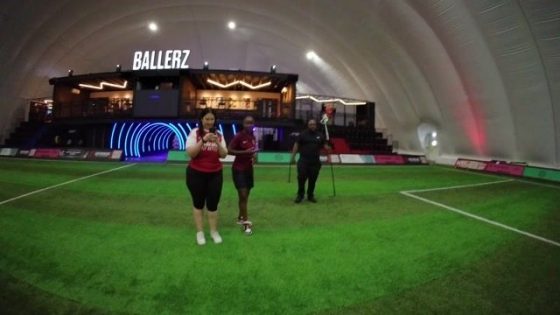
Venues, seats, staff, routes and live production become part of the same participation reality.
Digital
Streams, communities, identity, commerce and engagement stop existing as separate side channels.
Immersive
Watch parties, spatial interfaces and adaptive layers extend the event beyond the room.
The future of events cannot depend entirely on physical attendance. The modern event must behave as a connected participation ecosystem.
Definition
Shared realityA connected event environment where physical, digital and immersive participation operate as one system.
Category
Shared Reality InfrastructureInfrastructure that unifies physical, digital and immersive participation into one connected event reality.
Position
Pryntd is infrastructure.Reality convergence
Shared reality is what happens when audiences, venues, creators, systems and experiences stop behaving like disconnected islands.Accessibility is not a side issue. It proves that people, spaces, information, interfaces and participation systems still do not operate as one connected reality.
The Guardian / Access barriersBlue Dot Fever proves the event needs more ways to convert attention into participation, value and resilience.
If physical attendance weakens, the experience still scales digitally, socially, commercially and immersively.
Every event becomes a living participation graph that compounds across future events, communities and commercial relationships.
The event does not end at the door, the stream, the ticket, the sponsor booth or the replay. It becomes one connected system.
Physical
VenueSpatial
Digital twinDigital
Hybrid streamImmersive
Watch partyAdaptive
AI accessibility layerIdentity
Audience profileConnection
NetworkingCreation
Creator workflowsCommercial
Sponsor systemsValue
CommerceMemory
Post event replayCommunity
Ongoing participationThis is a directional planning model. It shows how shared reality can recover value by expanding participation beyond physical attendance alone.
Lost physical revenue
GBP 0Unsold seats multiplied by average ticket price.
Recoverable hybrid revenue
GBP 0Estimated remote participants buying hybrid access.
Sponsor uplift
GBP 0Added value from measurable hybrid participation.
Merch uplift
GBP 0Directional value from remote commerce conversion.
Participation expansion
0Potential additional participants beyond the venue.
Shared reality recovery value
GBP 0Fragmentation leaves value trapped in unsold seats. Shared reality creates new participation routes.
Events are not collapsing. They are fragmenting.
Pryntd transforms fragmented events into shared realities. That is why Pryntd is building Shared Reality Infrastructure for live events.