Skip to Pryntd homepage content
Technology Promised
A More Connected
Future
Computers connected information. The internet connected networks. Mobile connected people.
Cloud connected systems. AI connected intelligence. Immersive technology promised to connect reality itself.
Yet every generation became more fragmented.
Fragmented software
Fragmented workflows
Fragmented data
Fragmented experiences
Fragmented operations
Fragmented accessibility
Shared Reality
Unlock Shared Reality
See Shared Reality In Action
- 01Mainframe
- 02PC
- 03Internet
- 04Mobile
- 05Cloud
- 06AI
- 07XR
- 08Pryntd Shared Reality
The Future Became Fragmented
Technology was meant to simplify operations. Instead it created complexity.
Every new innovation solved a specific problem. Together they created a larger systems problem.
CRM
ERP
Ticketing
Accessibility
Livestreaming
IoT
Digital Twins
AI
Messaging
Payments
Analytics
Security
Disconnectednot shared
- Operational inefficiency
- Lost participation
- Exclusion
- Lost revenue
- Poor coordination
- Poor decision making
- Rising complexity


Presence People Can Shape
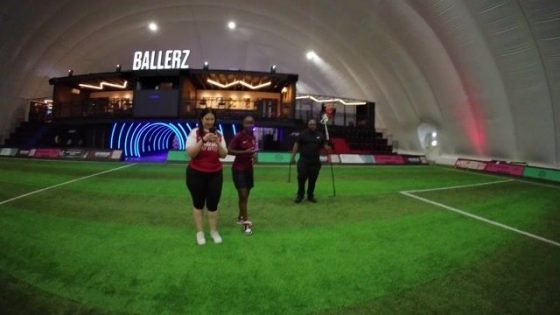
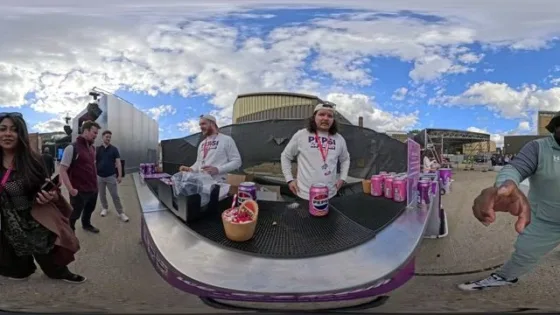
This is an interactive, user-generated audiovisual immersive experience designed to make people feel present inside a shared environment, not just watch one. It can be recorded or live streamed, multi-streamed, multi-perspective, multi-perception, multimodal and multidimensional.
Shared Reality matters because presence is valuable wherever people gather, learn, buy, perform, travel or need access. Business events brought together 1.65 billion participants and generated US$1.3 trillion in direct spending in 2025. Immersive training has shown learners can complete soft-skills training up to four times faster and feel up to 275% more confident applying what they learned. For accessibility, the opportunity is larger still: 1.3 billion people, about 16% of the world, experience significant disability.
1.65Bbusiness event participants worldwide in 2025.
4xfaster soft-skills training completion shown in immersive learning research.
1 in 6people worldwide experience significant disability.
Shared Reality turns any high-attention environment into a participatory, accessible and replayable layer of experience.
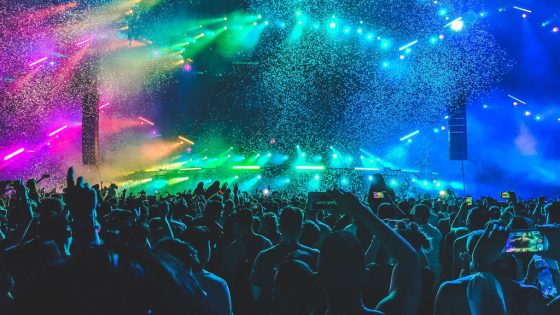
Crowds become part of the media layer: fan-generated perspectives, live sensory reactions, artist moments, backstage context and replayable memories from inside the atmosphere.
Live Nation reported 151M fans at shows in 2024
Performance becomes more reachable: multiple seats, captioned and audio-described views, rehearsal context, cast perspectives and post-show learning without flattening the magic of the room.
Broadway drew 12.3M attendances in 2023-24
Museums, galleries, ceremonies and heritage sites gain living context: stories, translations, access layers and audience contributions become part of the shared cultural record.
Creative sectors contribute 3.1% of global GDP
Destinations become interactive before, during and after the visit: guided routes, local voices, accessibility support, safety context and live destination storytelling.
1.4B international tourist arrivals in 2024
Stores become immersive media spaces: product stories, creator drops, assisted navigation, loyalty moments and shoppable live streams connected to measurable participation.
NRF forecast US$5.23T-US$5.28T US retail sales in 2024
Fan zones, nightlife, sports activations, cinemas, theme parks and launch events can become multi-perspective environments where audiences participate instead of passively consume.
Presence becomes programmable infrastructure
Mobile and Tablet Users
Double-tap the red icon to activate motion sensing.
Make sure you tap Allow when the prompt appears saying:
“pryntd.xyz would like to Access Motion and Orientation”
It brings the experience to life and allows you to look around hands-free.
Every Industry Suffers From The Same Problem
Fragmentation is the largest operational challenge of the digital age. It appears differently in every sector, but the architecture of the problem is the same.
Immersive Technology Was The Right Idea
Immersive technology promised presence, participation and intelligence. It should have solved fragmentation.
It imagined a world where people could interact naturally across physical and digital environments. A world where reality could respond.


Digital Twins
XR
AR
VR
Spatial Computing
Livestreaming
Hybrid Experiences
Human Environments
Presence
Participation
Context
Response
Immersive Technology Fragmented Too
Immersive technology created extraordinary experiences. It never became infrastructure.
Powerful moments. Limited adoption. Disconnected ecosystems. No convergence. No shared reality.
Unreal
Unity
Blender
Meta
Apple Vision
Headsets
Apps
Stores
Platforms
File Formats
Streaming
Toolchains
XR silosnot infrastructure
Fragmentation Meets Its Synthesis
Pryntd solves fragmentation by converging technologies into one browser native infrastructure layer for human environments.
The world has a fragmentation problem.
Operations, participation, accessibility, commerce and intelligence split across incompatible systems.
Immersive technology fragmented itself.
The tools became powerful, but the ecosystem remained hard to connect and harder to operate.
Pryntd turns convergence into infrastructure.
AI, XR, accessibility, digital twins and workflows become one browser native shared reality layer.
Pryntd Is Convergence Infrastructure


The Technology Already Exists
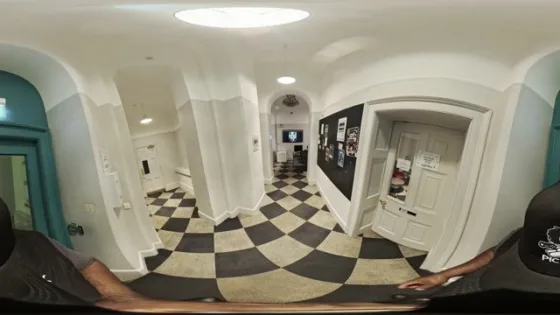
The interactive experience above is there to make the idea concrete. It shows how a real place can become something people can explore, record, stream and share directly in the browser.
Shared Reality Has To Work For Everyone
Pryntd is designed so access is present when someone needs it, invisible when they do not, and connected to the physical world through simple creation and QR entry points.
Accessibility AI That Fades Into The Background
At the bottom centre of every Pryntd page, the universal accessibility icon is always available for people who need it. They can speak, type or tap icons, and the AI can adapt the page and the experience around their needs.
That support can move with them into the real world: helping plan a visit, understand a venue, communicate access needs, navigate a moment and interact with the environment around them. The aim is not to replace physical presence; it is to help more people feel prepared, supported and able to be physically present in spaces and experiences they are too often excluded from.
As the AI becomes more agentic, it can support more of the journey end to end, factoring the person’s access challenges instead of treating accessibility as an afterthought. For people who do not need those features, the layer simply fades back. That matters for the one in four adults who live with disability and for the three in four who do not, because exclusion fragments families, audiences, teams and communities too.
1.3Bpeople worldwide experience significant disability.
1 in 4US adults report having a disability.
9 in 10people with energy-limiting conditions reported barriers to work, socialising, healthcare, cultural and leisure facilities, and getting out.
The Power Of The QR Code
Every Pryntd page automatically generates a QR code, turning posters, tickets, venue signage, packaging, objects and printed media into a doorway into the experience.
People can scan from the real world, open the shared reality instantly, then share it, download it or prynt it. A QR code makes the physical environment clickable without making people search, install an app or decode where the experience lives.
This matters because 2D codes are becoming mainstream infrastructure. GS1’s Sunrise 2027 marks the retail industry’s global move toward accepting QR-style 2D barcodes at point of sale, because physical products need richer connected data.
2027global retail target for 2D barcode readiness at point of sale.
Scanbridge venue, object, product or poster into a live experience.
Pryntshare, download and print the experience back into the world.
User Generated From Beginner To Expert
Pryntd is not only for specialist 3D teams. A beginner should be able to create, capture, explain and share a useful experience. An expert should be able to build richer layers, workflows, data, accessibility, commerce and operational intelligence.
That is why user-generated creation matters: the people closest to the place, event, product or story can become the authors of the shared reality. The platform should make the first action simple, then keep opening depth as the creator grows.
This turns audiences, staff, educators, venues, brands, artists and communities into active contributors rather than passive viewers.
79%people say user-generated content highly impacts their purchasing decisions.
Beginnercapture, describe, share and publish without needing a specialist workflow.
Expertadd data, AI, access, commerce and operations as deeper layers.
One Infrastructure Layer. Unlimited Human Environments.
Pryntd helps organisations solve operational challenges caused by fragmentation by converging AI, agentic AI, immersive technology, digital twins, accessibility systems, IoT, livestreaming, spatial computing, workflows and human participation into one browser native shared reality infrastructure.
AI
Agentic AI
Immersive Tech
Digital Twins
Accessibility
IoT
Livestreaming
Spatial Computing
Workflows
Participation
Shared Reality Enginebrowser native
1
One layer where physical, digital, virtual and hybrid environments can be understood together.
Web
Browser native delivery reduces hardware dependency and lets shared reality reach everyday devices.
Spatial
Human environments become machine-readable, operationally visible and adaptive to real needs.
Events Are The Perfect Human Environment
Events contain every challenge modern organisations face: participation, accessibility, commerce, communication, coordination, safety, training, operations and audience engagement.
Audience
Venue
Organiser
Creative
Professional
Sponsor
Operations
Accessibility
An event is a shared reality
A unified system where people, space and systems converge.
Events are not the category. They are the beachhead, because they compress the entire coordination problem into one live human environment.
If Pryntd can solve events, it can solve any human environment.
The same infrastructure can extend into venues, museums, tourism, heritage, retail, healthcare, education, property, smart cities and enterprise environments.
Every Stakeholder Becomes Part Of One Operating Reality
Pryntd turns disconnected event roles into a stakeholder engine where each participant can see, act and create value inside the same shared reality layer.
Before Pryntd
Value is trapped in separate tools, people and operating views.
Ticketing
Access
Streaming
Ops
Data
After Pryntd
Every stakeholder can participate through one shared operating reality.
People
Place
Systems
Value
Pryntd
A Dimensional Roadmap For Human Environments
Shared Reality evolves from media into infrastructure: from transforming reality to extending, hybridising, augmenting, converging and eventually modelling human experience itself.
Shared Reality For Every Human Environment
The category is infrastructure for human environments where participation, coordination and value intersect.
Events
Museums
Tourism
Heritage
Retail
Healthcare
Education
Property
Smart Cities
Enterprise


Language Models Understand Text Pryntd Understands Human Experience
Pryntd is building spatial intelligence models for human environments, starting with accessibility. We call this Shared Reality.