Blue Dot Feveris the symptom.Fragmentationis the disease.
Audiences are not rejecting culture. They are defaulting to isolated, passive and disconnected consumption because the environments around live and hybrid events have splintered into too many systems, screens, queues, apps, workflows and exclusions.
£274BPurple Pound opportunity reframed as participation infrastructure
£10k-£100kannual venue contract range for recurring infrastructure value
£18kaverage ACV target with portfolio scalability and operational lock in
Modern events are entering a fragmentation crisis.
Audiences, venues, organisers, creatives, professionals, sponsors and disabled audiences appear to face different problems. Structurally, they are all experiencing the same failure: fragmented systems producing fragmented participation.
Fragmentation creates operational friction.
Ticketing, access, livestreaming, sponsorship, fan engagement, commerce, staffing and venue operations run as disconnected layers.
Operational friction increases costs.
Teams compensate with manual work, duplicated tooling, reactive decision making and expensive production workarounds.
Increasing costs reduce participation.
Prices rise, accessibility breaks, hybrid audiences disengage and participation becomes harder to justify.
Reduced participation weakens culture, community and revenue.
Blue Dot Fever accelerates when people no longer feel present, connected or included together.
Every stakeholder sees a different pain. Pryntd sees the common architecture underneath it.
Fragmentation touches the full event surface: physical attendance, digital participation, operational visibility, accessibility, sponsorship, revenue and post event monetisation.
Venues
Organisers
Audience systems
Livestreaming
Accessibility
Ticketing
Sponsorship
Commerce
Fan engagement
Operations
Physical and digital participation
Post event monetisation
Pryntd began with accessibility and evolved into autonomous coordination infrastructure.
Pryntd started by solving the hardest participation challenges in immersive and hybrid experiences. The company learned that the event industry was not suffering from a content problem. It was suffering from a coordination problem.
Browser based immersive participation
No specialised hardware barriers, lower friction and cross device access.
Hybrid event coordination
Physical and digital audiences coordinated around the same live moment.
Accessibility first infrastructure
Inclusion treated as operational architecture, not a bolt on feature.
Realtime environmental intelligence
Signals from movement, participation and operations become actionable.
Digital twins and spatial intelligence
Venues become understandable, measurable and coordinateable environments.
Multi perspective participation
Audiences, teams and sponsors see the live environment from useful perspectives.
Operational intelligence systems
Event workflows move from manual reaction to informed orchestration.
Persistent shared reality environments
The event continues as an audience, commerce and sponsorship environment.
Intellectual pivot
Events are human environments where people, systems, spaces and experiences converge.
When systems fragment
Costs rise, accessibility fails and operational complexity compounds.
When participation fragments
Engagement weakens, culture feels thinner and audiences drift into passive fandom.
When revenue fragments
Monetisation collapses around the event day instead of compounding through the year.
When coordination becomes infrastructure
Shared Reality becomes operationally possible at scale.
Pryntd’s AI is not generic AI. It understands live human environments.
The moat is operational. Pryntd is trained on the signals, behaviours and coordination workflows that exist when people gather across physical and hybrid spaces.
Audience movement and participation signals
Accessibility interactions and access needs
Realtime venue operations and workflows
Hybrid engagement and digital continuity
500+ live experiencesReal behaviours from events, not synthetic assumptions.
Accessibility interaction systemsInclusion data becomes coordination intelligence.
Hybrid engagement patternsPryntd sees how physical and digital participation influence each other.
Environmental coordination signalsMovement, pressure, attention, access and operations become one intelligence layer.
Operational decision makingThe system understands what venues and organisers actually need to coordinate.
Shared Reality is the outcome. Autonomous Coordination is the mechanism.
Pryntd detects the state of the environment, decides what needs to change, then coordinates people, systems, spaces and experiences across physical and hybrid participation.
Realtime signals
Pryntd continuously detects operational, audience and environmental signals across the event surface.
Human environment intelligence
The system uses proprietary event intelligence to optimise accessibility, engagement, coordination and participation.
Unified action
Pryntd coordinates venue teams, organisers, audiences, sponsors and digital layers into a shared operational reality.
One infrastructure layer, different compounding value for every stakeholder.
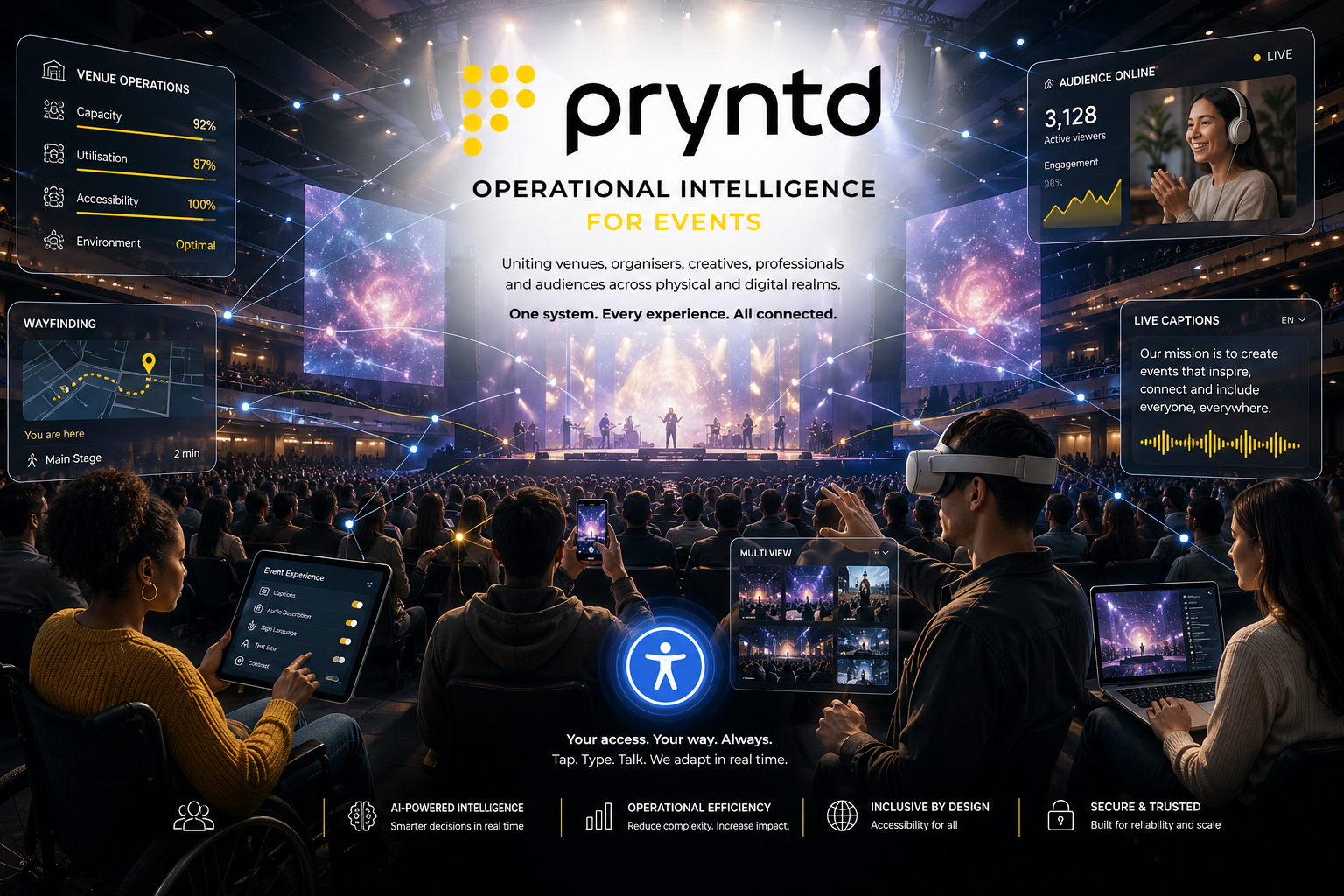
Pryntd is not event production software. It is the coordination layer that makes venues, organisers, creatives, sponsors and audiences more connected, measurable and monetisable.
From venue operation to venue intelligence.
Pryntd reduces friction, automates access visibility and makes the physical venue a continuously valuable digital and operational asset.
Reduced operational frictionReduced compliance riskIncreased spend per headPersistent monetisationVenue intelligenceAccessibility automation
Unified coordination for the whole event surface.
Organisers can scale hybrid participation, prove engagement and coordinate stakeholders without stitching together disconnected systems.
Unified coordinationAudience engagementPersistent audience ecosystemsSponsorship attributionOperational efficiencyHybrid scalability
Creative worlds that keep earning after the live moment.
Pryntd turns shows, exhibitions and cultural moments into persistent communities and monetisable shared reality environments.
Persistent communitiesMonetisable environmentsExpanded participationHybrid audience reachCommerce continuityFan relationship depth
Sponsorship inventory becomes measurable and persistent.
Brands gain visibility across engagement, access, movement, digital participation and post event audience continuity.
Measurable engagementPersistent inventoryAudience intelligenceRealtime visibilityAttribution depthYear round value
Presence, inclusion and shared emotional connection.
The audience experience becomes less passive and less fragmented. People can participate together, across access needs, location and device.
PresenceParticipationInclusionContinuityAccessibilityShared connection
From cultural institutions to city scale movement.
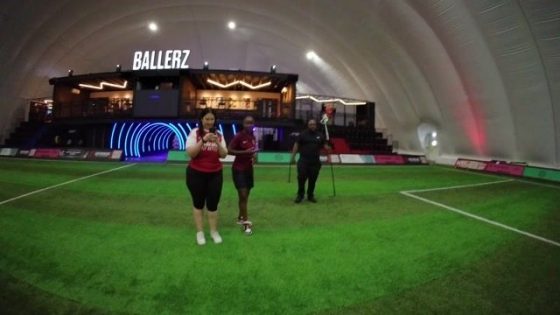
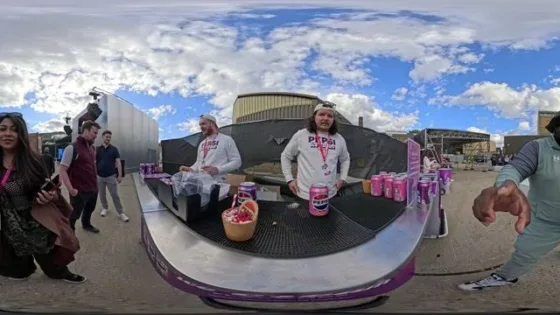
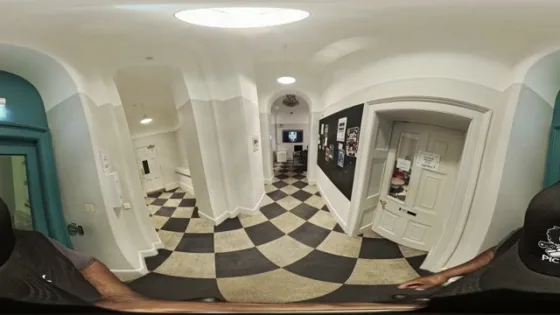
Somerset House and Notting Hill Carnival show why Pryntd has to be infrastructure, not a single event tool. The same coordination problem appears in built environments, open streets, hybrid audiences and complex stakeholder systems.

Somerset House
Architectural, cultural and operational complexity where access, participation and venue intelligence need to work as one environment.

Notting Hill Carnival
Large scale cultural participation where movement, safety, accessibility, sponsors, commerce and shared presence converge in real time.
Revenue generation no longer stops when the house lights go up.
Pryntd turns events and venues into persistent revenue environments: fan engagement, sponsorship inventory, commerce, access and operational value continue beyond the live window.
£10k-£100kannual venue contracts across venue size, portfolio value and coordination depth.
£18k ACVaverage contract value target designed for scalable SaaS infrastructure adoption.
Recurring ARROngoing operational value, accessibility automation and persistent audience environments.
Portfolio scaleOne venue unlocks repeatable deployment across estate, operator and organiser networks.
Compliance automationAccessibility is operationalised and monitored as part of the venue intelligence layer.
Operational lock inAs Pryntd coordinates more workflows, the environment becomes more valuable and harder to replace.
The Purple Pound is not a side market. It is a participation signal.
Inaccessible environments directly create fragmentation fatigue because millions of people are excluded before participation even begins. Pryntd treats accessibility as infrastructure: participation expansion, revenue unlock, compliance automation, operational intelligence and strategic advantage.
When environments work better for disabled people, they work better for everyone.
£274B
The Purple Pound
Generic AI companies do not possess human environment intelligence.
Pryntd’s moat is built from the lived complexity of events: audience behaviour, accessibility workflows, venue operations, sponsor visibility, hybrid patterns and persistent participation data.
Proprietary signal base
500+ live experiences create operational understanding that generic models do not have.
Browser native distribution
Participation scales across devices without specialised hardware, install friction or closed access.
Accessibility first architecture
The system is trained around inclusion, making participation expansion part of the core infrastructure.
Venue intelligence layer
Operational insight compounds as physical and digital environments become measurable.
Persistent revenue environments
Audience, commerce and sponsorship value continue before, during and after the live moment.
Coordination lock in
As more workflows route through Pryntd, the platform becomes the shared operational reality.